
Key Takeaways
- Life after gallbladder removal is completely normal and healthy for most people.
- After laparoscopic gallbladder surgery, most people go home within a day and return to desk work in about a week.
- Your liver still makes bile. It now flows straight into the intestine instead of being stored.
- Some people have loose stools or bloating for a few weeks. Small, low-fat meals help the body adjust.
- Fever, yellow eyes or skin, or worsening pain after surgery need prompt medical attention.
Introduction
If you have been advised to remove your gallbladder, one question usually comes up first: what will life be like without it? Many people worry that they will never digest food properly again or will have to follow a strict diet for life.
In reality, gallbladder removal (cholecystectomy) is one of the most common and safest surgeries performed today. Most people feel better than they did before, because the painful gallstone attacks stop. This guide explains life after gallbladder removal: recovery, diet, digestion, and the signs that need a doctor’s attention.
In This Article
- What Does the Gallbladder Do?
- Recovery Timeline After Laparoscopic Surgery
- How Digestion Changes
- What to Eat After Gallbladder Removal
- Long-Term Life After Gallbladder Removal
- 6 Tips for a Smooth Recovery After Gallbladder Surgery
- Warning Signs After Surgery
- Frequently Asked Questions
- Gallbladder Surgery at Medfine Hospitals
What Does the Gallbladder Do?
The gallbladder is a small, pear-shaped organ under the liver. Its job is to store bile, a digestive fluid made by the liver, and release it when you eat fatty food.
The gallbladder does not make bile. After it is removed, your liver keeps producing bile, which now drips steadily into the small intestine. That is why digestion continues normally for most people. If you are still deciding on surgery, read gallstones symptoms and when surgery is needed.
Recovery Timeline After Laparoscopic Surgery
Most gallbladder surgeries today are done laparoscopically, through 3 or 4 small cuts. Recovery is much faster than with open surgery.
| Time after surgery | What to expect |
|---|---|
| Day 0 to 1 | Walking within hours; most patients go home the same day or the next day |
| Days 1 to 3 | Mild pain at the cuts; shoulder pain from the gas used during surgery is common and passes |
| Days 3 to 7 | Light activity at home; most people return to desk work in about a week |
| Weeks 2 to 4 | Normal daily routine; avoid heavy lifting and strenuous exercise |
| After 4 to 6 weeks | Most people return to full activity, including the gym, once the surgeon approves |
Recovery can take longer after open surgery or if the gallbladder was badly inflamed. Your surgeon will give you a timeline that fits your case.
You can also read the NHS guide to gallbladder removal for general information about the operation.
How Digestion Changes
Because bile is no longer stored and released in larger amounts, your body may need a few weeks to adjust, especially to fatty meals. Common short-term changes include:
- Loose stools or diarrhoea, particularly after oily or heavy meals
- Bloating and gas in the first few weeks
- Mild indigestion after large meals
For most people these symptoms settle within a few weeks to a few months. A small number have ongoing loose stools. This can usually be managed with diet changes and, if needed, medicines prescribed by your doctor.
What to Eat After Gallbladder Removal
There is no single strict diet, but these habits make the adjustment easier:
- Eat smaller meals more often. Four to six small meals are easier to digest than two or three heavy ones.
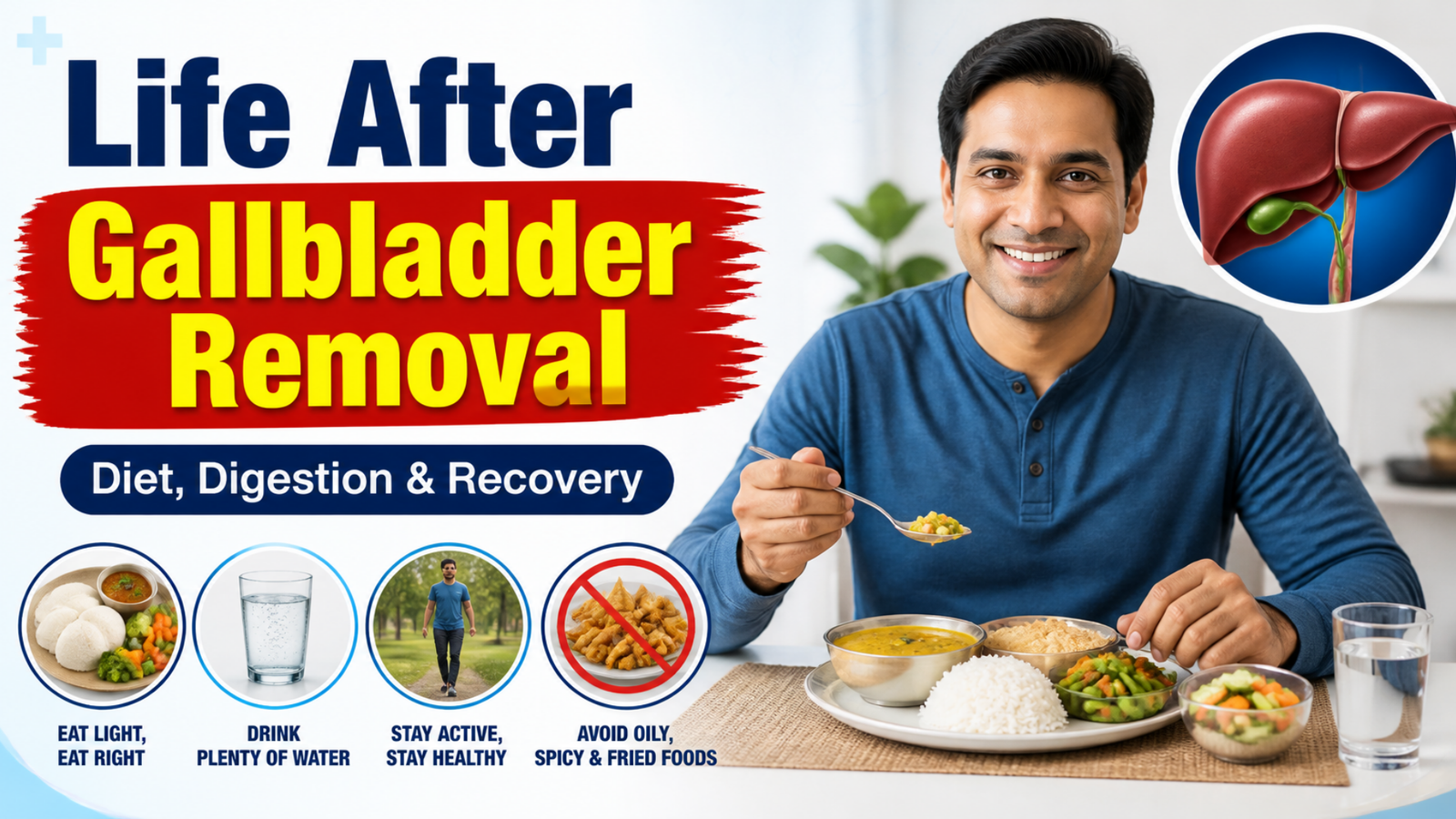
- Go easy on fat at first. Choose dal, idli, steamed rice, chapati, vegetables, curd and grilled or boiled fish and chicken.
- Add fibre slowly. Oats, vegetables, fruits and whole grains help firm up stools, but adding too much too fast can cause gas.
- Drink enough water. This is especially important if you have loose stools.
- Reintroduce foods gradually. Try one richer food at a time to see how your body responds.
Foods to limit in the first few weeks:
- Deep-fried snacks such as samosa, bajji, pakoda and chips
- Rich, oily curries and gravies made with lots of ghee, butter or cream
- Full-fat dairy, such as cream, cheese and full-cream milk in large amounts
- Fatty red meat and processed meats
- Very spicy food, caffeine and alcohol, which can upset the stomach
Most people can return to a normal, balanced diet within a few weeks, simply eating fried and oily food in moderation.
Long-Term Life After Gallbladder Removal
- Work: desk jobs usually after about a week; physical jobs after 2 to 4 weeks, as advised.
- Driving: once you can move and brake without pain and are not taking strong painkillers, usually within a week.
- Exercise: start with walking from day one; avoid heavy lifting until your surgeon clears you.
- Long term: the vast majority of people have no lasting problems and no further gallstone pain.
6 Tips for a Smooth Recovery After Gallbladder Surgery
A few simple habits make life after gallbladder removal easier, especially in the first two months:
- Keep walking. Short walks several times a day improve blood flow, ease gas pain and lower the risk of clots.
- Keep the wounds clean and dry. Follow your surgeon’s advice on bathing and dressing changes.
- Keep a food diary. Note which meals cause bloating or loose stools so you can adjust portions.
- Do not skip meals. Regular, small meals help your digestion settle into a steady rhythm.
- Take medicines as prescribed. Use painkillers and any digestive medicines exactly as advised, and avoid self-medicating.
- Attend your follow-up visit. Your surgeon will check healing and answer questions about diet, work and exercise.
Warning Signs After Surgery
Contact your doctor promptly if you notice any of these:
- Fever or chills
- Yellowing of the eyes or skin (jaundice)
- Severe or worsening abdominal pain
- Repeated vomiting, or being unable to eat or drink
- Redness, swelling or discharge from a wound
- Dark urine or pale, clay-coloured stools
These can signal infection, a bile leak or a stone left in the bile duct. All of these can be treated when caught early.
Frequently Asked Questions
Can I live normally without a gallbladder?
Yes. The gallbladder is not essential. Most people live normally and eat a regular diet after recovery.
Will I gain weight after gallbladder removal?
The surgery itself does not cause weight gain. Some people eat more once the pain stops, so a balanced diet and regular activity still matter.
How long does diarrhoea last after gallbladder surgery?
For most people it settles within a few weeks. If it continues beyond a couple of months, see your doctor, as simple treatments can help.
Can gallstones come back after the gallbladder is removed?
Stones cannot form in the gallbladder once it is gone. Rarely, a stone can form or remain in the bile duct, which your doctor can treat.
Gallbladder Surgery at Medfine Hospitals
At Medfine Hospitals in BTM Layout, Bengaluru, our experienced general and laparoscopic surgeons perform keyhole gallbladder removal with a focus on quick recovery and clear after-care guidance. Learn more about gallstones surgery in Bangalore.
Call 8431 159 357 or book a consultation to talk to our surgical team.