
Key Takeaways
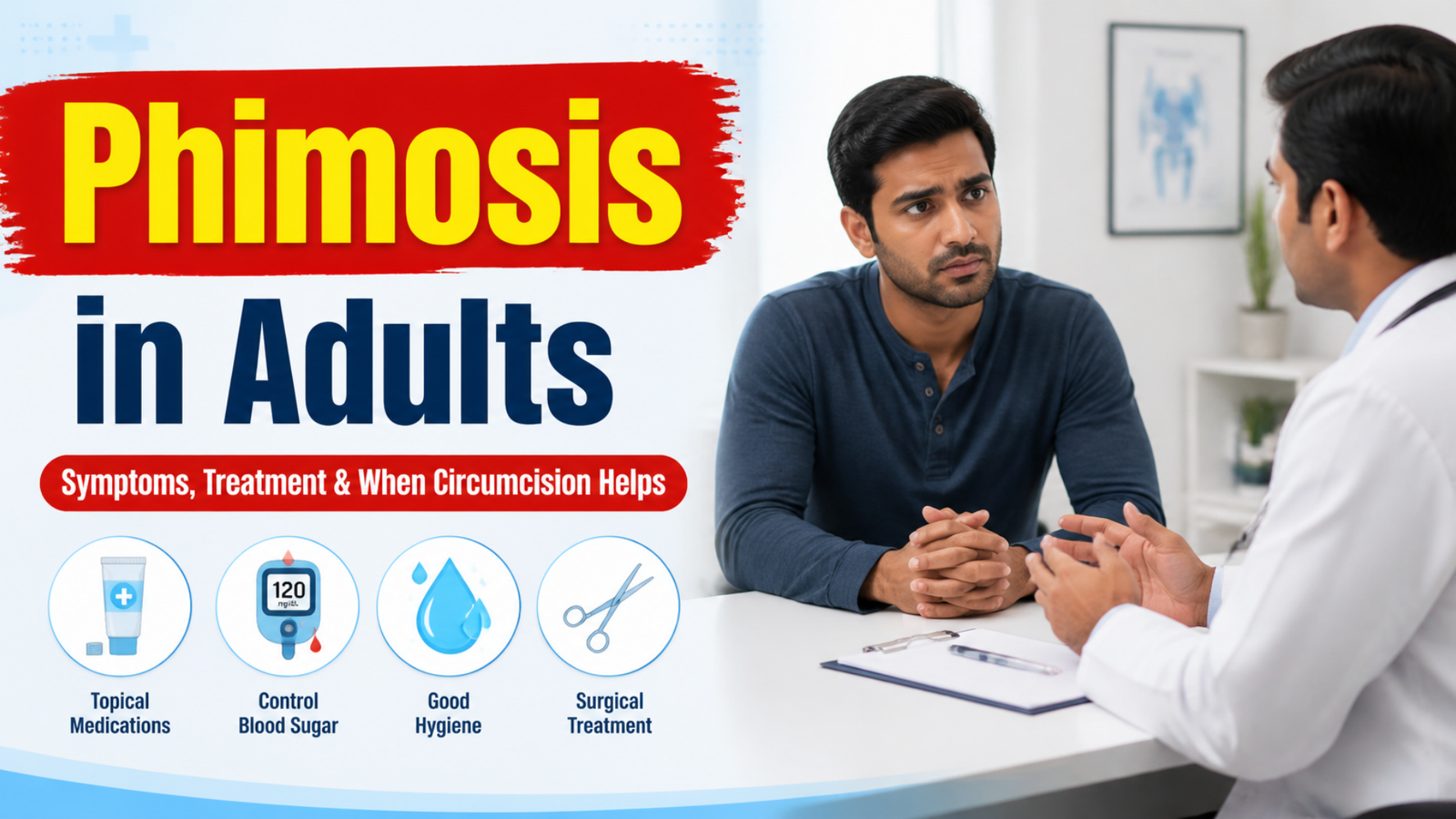
- Phimosis in adults means the foreskin is too tight to pull back over the head of the penis.
- In young boys it is normal. In adults it is usually caused by infection, inflammation, diabetes or scarring.
- Mild phimosis can often be treated with a prescribed steroid cream and gentle stretching.
- Circumcision is recommended when the foreskin is scarred, infections keep returning, or creams don’t work.
- A foreskin that is stuck behind the head of the penis and swelling (paraphimosis) is an emergency.
Introduction
A tight foreskin is a common problem, but many men feel too embarrassed to see a doctor about it. They put up with pain, irritation or repeated infections for months or even years.
Phimosis in adults is very treatable, and it is usually not serious. Often it does not even need surgery. This guide explains what causes it, the symptoms to look for, the treatment options, and when circumcision is the right choice.
In This Article
- What Is Phimosis?
- Causes of Phimosis in Adults
- Symptoms to Watch For
- Paraphimosis: When It Is an Emergency
- Treatment Without Surgery
- Phimosis in Adults and Diabetes: An Important Link
- When Is Circumcision Needed?
- What to Expect From Circumcision
- Frequently Asked Questions
- Phimosis Treatment at Medfine Hospitals
What Is Phimosis?
Phimosis is a condition in which the foreskin (the skin covering the head of the penis) is too tight to be pulled back fully.
- Physiological phimosis is normal in babies and young boys. The foreskin naturally loosens with age, and in most boys it can be pulled back by the teenage years. It should never be forced back.
- Pathological phimosis develops later, or does not resolve, because of scarring or inflammation. This is the type that affects adults and usually needs treatment.
Causes of Phimosis in Adults
- Repeated infections of the foreskin and head of the penis (balanitis or balanoposthitis)
- Diabetes: high sugar levels make infections more likely. A tight foreskin can sometimes be an early sign of undiagnosed diabetes.
- Poor hygiene, which allows irritation and infection to build up
- Lichen sclerosus, a skin condition that causes white, hard scarring of the foreskin
- Scarring from injury or from forcing the foreskin back in childhood
Symptoms to Watch For
- The foreskin cannot be pulled back, or only partly
- A tight, white ring of skin at the tip of the foreskin
- Pain, tightness or small cracks in the skin during erections or sex
- The foreskin balloons when you pass urine, or the urine stream is weak or sprays
- Redness, swelling, itching or a smelly discharge under the foreskin
- Infections that keep coming back
Paraphimosis: When It Is an Emergency
Paraphimosis happens when a tight foreskin is pulled back behind the head of the penis and cannot return to its normal position. The skin acts like a tight band, cutting off blood flow and causing painful swelling.
Go to a hospital immediately if your foreskin is stuck behind the head of the penis and the area is swelling or changing colour. Do not wait for it to settle on its own.
Treatment Without Surgery
Many adults with mild phimosis improve without an operation:
- Steroid cream: a doctor-prescribed cream, applied for a few weeks, softens the tight skin so it can stretch.
- Gentle stretching: after a bath, gently ease the foreskin back a little, never to the point of pain.
- Treating infection: antifungal or antibiotic creams if balanitis is present.
- Controlling blood sugar: if you have diabetes, better sugar control lowers the risk of repeated infection.
- Good hygiene: wash under the foreskin daily with plain water, and avoid harsh soaps.
Avoid trying to force the foreskin back. This can cause tears, scarring and paraphimosis.
The NHS guide to tight foreskin (phimosis) also has helpful general information.
Phimosis in Adults and Diabetes: An Important Link
Doctors often see phimosis in adults who have diabetes, sometimes before the diabetes itself has been diagnosed. Sugar in the urine creates a moist environment under the foreskin where yeast and bacteria grow easily.
Repeated infections then cause swelling, cracks and scarring, and the foreskin gradually becomes tighter. This is why a doctor may check your blood sugar if you develop a tight foreskin in adulthood.
If you have diabetes, keeping your sugar levels under control, keeping the area clean and dry, and treating infections early can stop phimosis from getting worse. It also helps prescribed creams work better.
When Is Circumcision Needed?
Your doctor may recommend circumcision (surgical removal of the foreskin) if:
- Creams and stretching have not helped after a proper trial
- The foreskin is badly scarred, for example from lichen sclerosus
- Infections or balanitis keep coming back
- Phimosis causes problems passing urine
- You have had an episode of paraphimosis
- Pain or tearing makes sex difficult
In some cases a smaller procedure called preputioplasty, which widens the foreskin instead of removing it, may be an option.
What to Expect From Circumcision
Adult circumcision is a short, routine procedure, usually done as a day-care surgery. Modern techniques mean less pain, minimal bleeding and a neater result.
| Recovery stage | What to expect |
|---|---|
| Same day | Go home a few hours after the procedure |
| First few days | Mild swelling and soreness, managed with painkillers |
| Within about a week | Most men return to desk work |
| About 4 to 6 weeks | Sexual activity can usually resume, once the doctor advises |
Frequently Asked Questions
Can phimosis in adults be cured without surgery?
Yes, often. Mild to moderate cases frequently respond to steroid cream and gentle stretching. Scarred or severe cases usually need circumcision.
Is phimosis a sexually transmitted infection?
No. Phimosis is not an STI and is not contagious, although infections under the foreskin can make it worse.
Does phimosis affect fertility?
Phimosis itself does not affect fertility, but pain during sex can affect your sex life. Treatment usually solves this.
Is adult circumcision painful?
The procedure is done under anaesthesia, so you feel no pain during it. Discomfort afterwards is usually mild and settles within a few days.
Phimosis Treatment at Medfine Hospitals
At Medfine Hospitals in BTM Layout, Bengaluru, our specialists offer private, confidential consultations for foreskin problems. They treat phimosis with medication where possible and with modern circumcision when needed. Learn more about phimosis treatment in Bangalore and circumcision in Bangalore.
Call 8431 159 357 or book a consultation to speak with a specialist in confidence.