

Key Takeaways
- Gallstones symptoms often appear suddenly and may start as mild discomfort before becoming severe.
- Gallstones form when bile components like cholesterol or bilirubin become imbalanced.
- Many people have no symptoms at first, but once symptoms begin, they can worsen quickly.
- There are different types of gallstones, and each type develops due to specific causes.
Introduction
Gallstones are a common digestive condition that affects the gallbladder, especially in adults. While some people may have gallstones without any symptoms, others experience sudden and intense gallstones symptoms that interfere with daily life.
These stones develop when substances in bile harden and form solid deposits. Understanding gallstones symptoms, their types, and when surgery is required helps in identifying the condition early and avoiding serious complications.
What Are Gallstones?
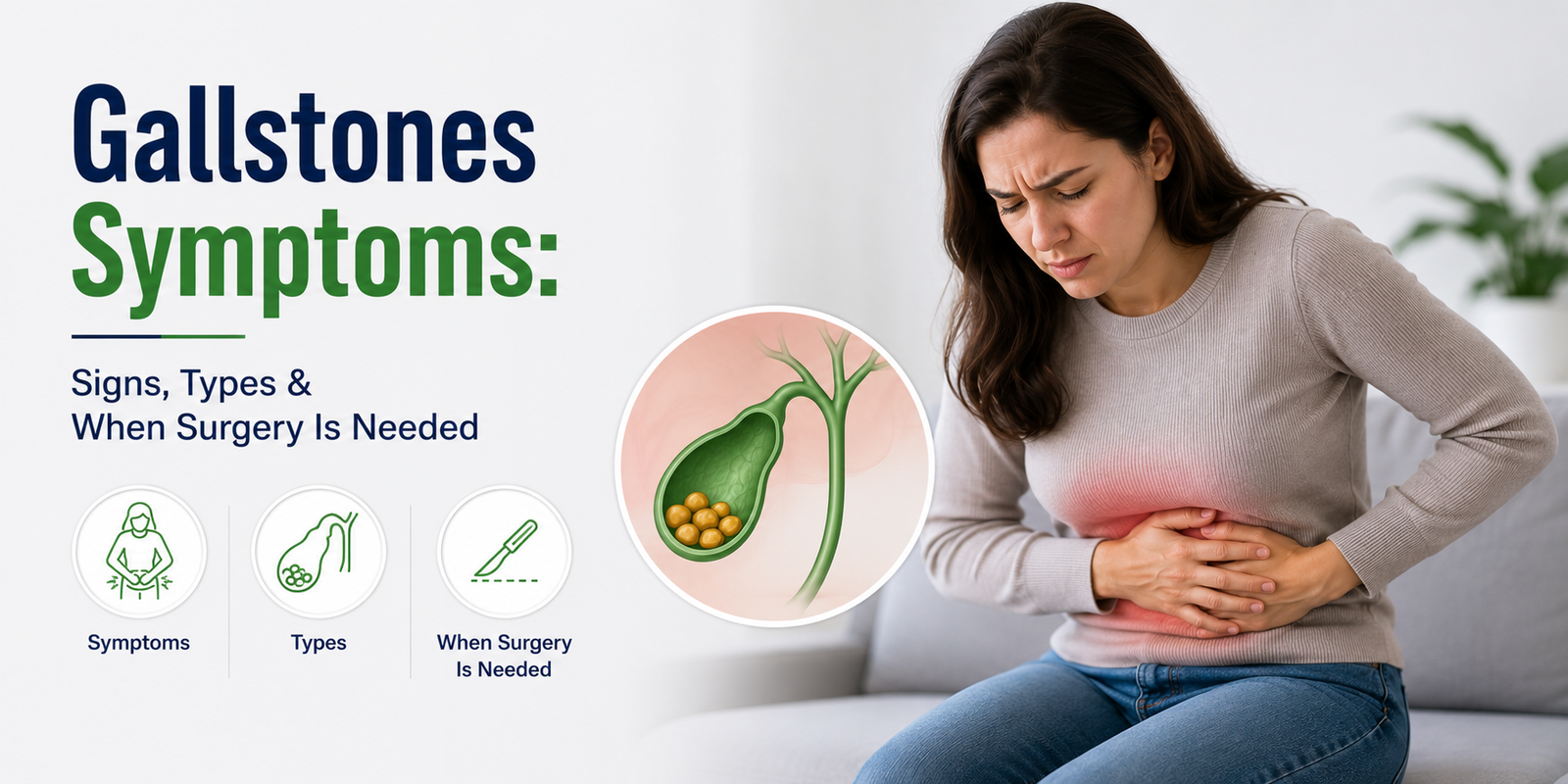
Gallstones are small, hardened deposits that form inside the gallbladder, a small organ located below the liver. The gallbladder stores bile, which helps break down fats during digestion.
When bile contains too much cholesterol or bilirubin, small crystals begin to form. Over time, these crystals grow into stones. Many people may not notice gallstones symptoms initially because the stones remain silent until they block the bile ducts.
Types of Gallstones
Gallstones are mainly classified based on their composition, and understanding the types of gallstones helps in knowing how they develop and behave.
- Cholesterol gallstones : These are the most common type of gallstones and form when there is excess cholesterol in bile. They usually appear yellow or green and develop gradually over time.
- Pigment gallstones : These stones are darker and form due to excess bilirubin. They are more common in people with liver disease or blood disorders.
Even though the types differ, both can lead to similar gallstones symptoms if they obstruct the flow of bile.
Gallstones Symptoms
Gallstones symptoms may not always be present, but when they appear, they can be sudden and intense. The severity depends on whether the stone is blocking a duct or causing inflammation.
Common Symptoms
- Upper abdominal pain : Pain usually occurs on the right side of the abdomen and often starts after eating fatty foods. The discomfort may last from minutes to hours.
- Bloating and indigestion : Many people experience heaviness or fullness after meals, especially when digestion is affected.
- Nausea and vomiting : Gallstones symptoms often include a feeling of sickness during pain episodes.
Severe Symptoms (Warning Signs)
- Persistent or worsening pain : Pain that does not go away may indicate blockage or inflammation.
- Pain spreading to the back or shoulder : This is a typical sign of a gallbladder attack.
- Fever or chills : These may suggest infection and require urgent medical care.
- Yellowing of the skin or eyes : This happens when bile flow is blocked and needs immediate attention.
Pain caused by gallstones symptoms can sometimes feel confusing, and in some cases it may resemble other abdominal conditions, which is why understanding patterns like appendicitis vs gas pain helps differentiate the cause
Why Gallstones Are Formed
Gallstones develop due to a combination of lifestyle and biological factors that affect bile balance.
- High cholesterol levels : Excess cholesterol can form crystals that gradually turn into gallstones.
- Obesity : Increased body weight affects bile composition and increases the risk of gallstones symptoms.
- Rapid weight loss : Losing weight too quickly can disturb bile balance and lead to stone formation.
- Diabetes : People with diabetes often have higher chances of developing gallstones.
- Family history : Genetics can also play a role in gallstone formation.
These factors may act together, increasing the likelihood of developing gallstones over time.
When Do Gallstones Become Dangerous?
Gallstones symptoms become serious when they lead to complications that affect normal body function.
- Blocked bile duct : This can cause severe and continuous pain that requires immediate treatment.
- Gallbladder inflammation : Known as cholecystitis, this condition causes persistent discomfort and swelling.
- Infection : Fever along with pain indicates infection and should not be ignored.
- Pancreatitis : In rare cases, gallstones can affect the pancreas and lead to serious complications.
Ignoring gallstones symptoms can allow the condition to progress, making treatment more complex.
When Is Surgery Needed for Gallstones?
Surgery is recommended when gallstones symptoms become frequent or lead to complications. The goal is to prevent repeated pain and long-term damage.
- Repeated pain episodes : Frequent attacks indicate that the gallstones are actively causing problems.
- Severe symptoms : Continuous pain, vomiting, or discomfort requires medical intervention.
- Complications : Infection or blockage makes surgery necessary.
- Large or multiple stones : These increase the risk of recurring gallstones symptoms.
In such cases, doctors usually recommend removing the gallbladder, and understanding the procedure through gallstones surgery in Bangalore can help patients make informed decisions
Diagnosis of Gallstones
Doctors use simple tests to confirm the presence of gallstones and evaluate their impact.
- Ultrasound : This is the most common and effective method to detect gallstones.
- Blood tests : These help identify infection or liver-related issues.
- CT scan : Used in more complex cases to get a detailed view.
Early diagnosis ensures timely treatment and reduces the risk of complications.
Treatment Options for Gallstones
Treatment depends on the severity of gallstones symptoms and whether complications are present.
Non-Surgical Treatment
- Monitoring is recommended when there are no symptoms.
- Dietary changes help reduce discomfort and prevent worsening.
- Medicines may be used in some cases, but they are not always effective.
Surgical Treatment
- Removal of the gallbladder is the most common solution.
- The procedure is usually minimally invasive.
- Recovery is quick, and recurrence is prevented.
Surgery remains the most effective treatment when gallstones symptoms are present.
What Happens If Gallstones Are Not Treated
Ignoring gallstones symptoms can lead to worsening health issues over time.
- Pain episodes may become more frequent and severe.
- Infection risk increases as stones block bile flow.
- Inflammation can damage the gallbladder.
- Complications may affect nearby organs like the pancreas.
Early treatment helps prevent these complications and improves overall outcomes.
How to Prevent Gallstones
Certain lifestyle changes can reduce the risk of developing gallstones.
- Maintain a healthy weight through balanced diet and exercise.
- Avoid rapid weight loss.
- Include fiber-rich foods in daily meals.
- Limit intake of fatty and processed foods.
- Stay physically active.
These habits support better digestion and reduce the chances of gallstone formation.
When Should You See a Doctor?
You should seek medical help if gallstones symptoms appear or worsen.
- Sudden and severe abdominal pain
- Pain lasting for several hours
- Fever or chills
- Yellowing of skin or eyes
- Persistent nausea or vomiting
Timely consultation ensures proper diagnosis and prevents complications.
Frequently Asked Questions
What are the first signs of gallstones symptoms?
Early signs include mild abdominal discomfort, bloating, and occasional pain after meals.
Can gallstones go away without surgery?
Gallstones usually do not disappear on their own, but some cases can be managed without surgery if there are no symptoms.
Are gallstones dangerous?
Gallstones can become dangerous if they block bile ducts or cause infection.
How long do gallstones symptoms last?
Pain can last from a few minutes to several hours depending on the severity.
When is gallbladder removal necessary?
Surgery is needed when gallstones symptoms become frequent, severe, or lead to complications.
Conclusion
Gallstones may remain silent for a long time, but once gallstones symptoms begin, they can quickly affect daily life. The condition can progress from mild discomfort to serious complications if ignored.
Recognising gallstones symptoms early and understanding when surgery is needed allows timely treatment and better outcomes. With proper care and medical guidance, gallstones can be managed effectively and safely.