

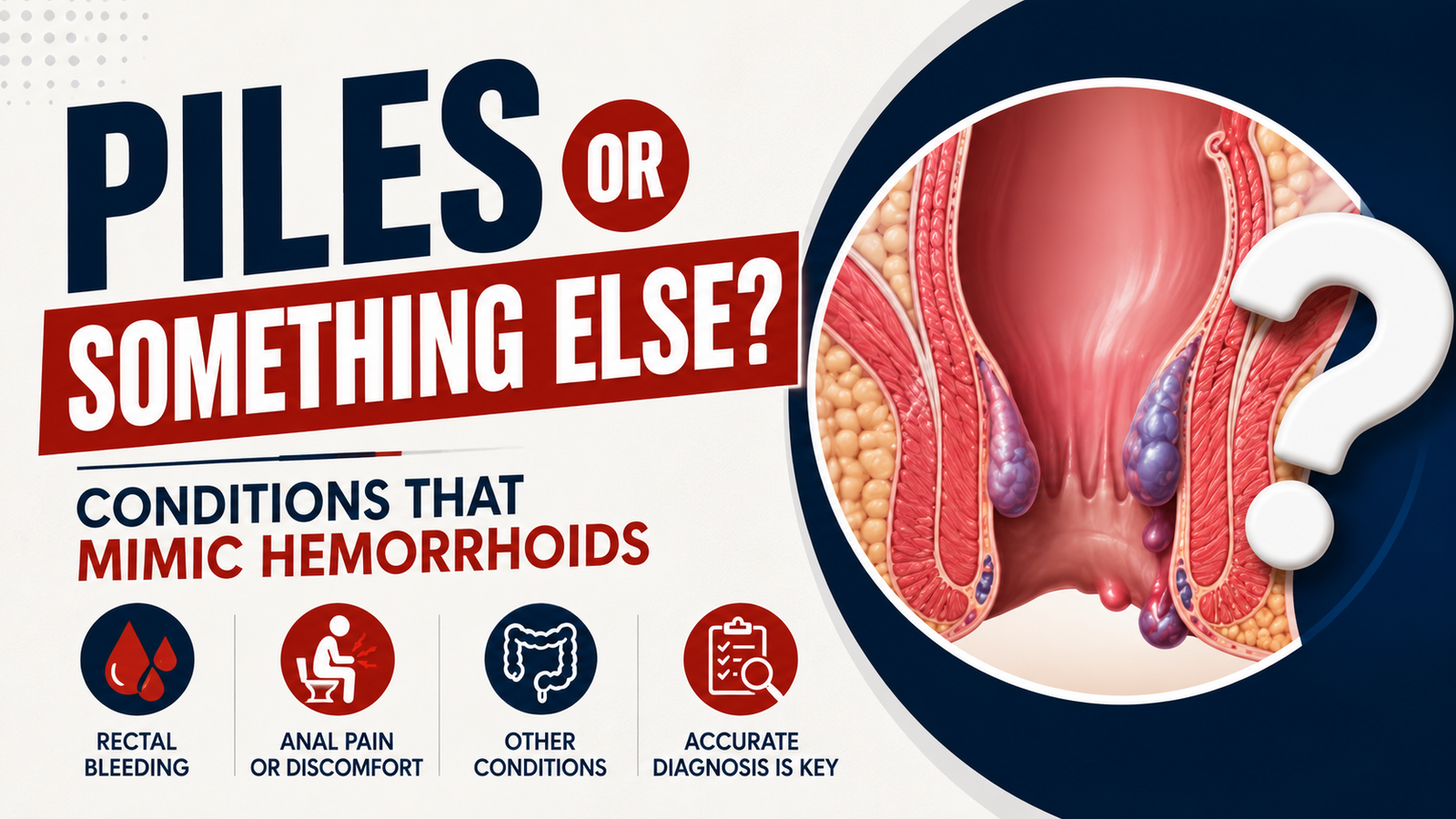
Is it piles or something else?
Bleeding, itching, and a lump near the anus can leave you wondering, is it piles or something else? These symptoms don’t always point to hemorrhoids. Six other conditions can look similar. Here’s how to tell them apart and why self-diagnosis isn’t a good idea.
7 min read · Patient Guide
Medfine Hospitals, Bengaluru
Same Symptoms
- Anal Fissure
- Anal Fistula
- Perianal Abscess
- Pilonidal Sinus
- Skin Tags
- Rectal Polyps
Many people assume pain, bleeding, itching, or a lump around the anus automatically means piles (hemorrhoids). They’re the most common anorectal condition – but far from the only one. An anal fissure, fistula, abscess, pilonidal sinus, or even a colorectal disease can look almost identical on the surface, and mistaking one for another delays the right treatment.
Understanding the differences isn’t about self-diagnosis — it’s about knowing when a lump is just a lump, and when it needs a doctor’s eyes on it.
What are piles, exactly?
Piles are swollen, enlarged veins inside the rectum or around the anus — usually the result of pressure that builds up from constipation, prolonged sitting, pregnancy, obesity, heavy lifting, or repeated straining.
- Bright red bleeding during bowel movements
- Itching around the anus
- Pain or discomfort while passing stools
- Swelling or a soft lump near the anus
- Mucus discharge
- A feeling of incomplete evacuation
None of these symptoms are unique to hemorrhoids — which is exactly why the six conditions below get mistaken for them so often.
Six conditions that mimic hemorrhoids
The anal region packs blood vessels, glands, skin, and muscle into a small space — so different diseases can trigger near-identical symptoms, especially early on.
01 · Most confused with fissures
Anal Fissure
A small tear in the anal lining. Both fissures and piles bleed — but fissure pain is sharp and often lingers for hours after passing stool.
- Severe pain during bowel movements
- Bright red bleeding
- Burning sensation
- Fear of bowel movements due to pain
Usually caused by hard stools & constipation.
02 · Infection-driven
Anal Fistula
An abnormal tunnel between the anal canal and skin, usually following an infection or abscess.
- Persistent pus discharge
- Recurrent swelling
- Pain near the anus
- Foul-smelling drainage
A lump near the anus is often mistaken for external piles.
03 · Needs urgent care
Perianal Abscess
A pus collection from bacterial infection around the anal region — sudden onset, needs prompt attention.
- Severe throbbing pain
- Painful swelling near the anus
- Fever or chills
- Redness and warmth
Usually requires drainage, not just medication.
04 · Different location entirely
Pilonidal Sinus
Develops near the tailbone, just above the buttock crease — close enough to be confused with piles until examined.
- Pain while sitting
- Swelling near the tailbone
- Pus or blood discharge
- Recurrent infections
Sits higher than typical hemorrhoid swelling.
05 · Usually harmless
Skin Tags
Harmless folds of skin often left behind after an old hemorrhoid or fissure has healed.
- A soft lump near the anus
- Mild irritation
- Difficulty with hygiene
Generally don’t bleed or cause severe pain.
06 · Never ignore this one
Rectal Polyps / Colorectal Disease
Less common, but polyps and colorectal conditions can also cause rectal bleeding.
- Blood in stools
- Change in bowel habits
- Unexplained weight loss
- Persistent abdominal discomfort
Bleeding without an obvious cause always warrants a check.
One clue, six different answers
The symptoms overlap. The details don’t. Here’s the single clue that usually points away from piles and toward something else.
- Anal Fissure
Sharp pain that lingers for hours after a bowel movement — piles rarely hurt this much.
Persistent pus discharge and recurring swelling, not just bleeding.
- Perianal Abscess
Throbbing pain with fever — a sign of active infection.
Swelling higher up, near the tailbone rather than the anal opening.
- Skin Tags
No bleeding, no real pain — just a leftover fold of skin.
- Rectal Polyps
Bleeding with changed bowel habits or unexplained weight loss — needs urgent evaluation.
When it's time to see a doctor
Book a consultation if you notice
- Persistent bleeding during bowel movements
- Severe anal pain
- A lump that keeps enlarging
- Pus or foul-smelling discharge
- Fever with anal swelling
- Symptoms lasting more than two weeks
- Recurrent episodes despite treatment
How these conditions get diagnosed
An accurate diagnosis directs treatment at the actual cause — not just the symptom.
Medical history & physical exam
Digital rectal exam
Proctoscopy / anoscopy
Colonoscopy, if indicated
Imaging for fistulas or abscesses
Get the right diagnosis, not a guess.
Medfine Hospitals evaluates and treats piles, fissures, fistulas, pilonidal sinus, and other anorectal conditions with a detailed assessment before any treatment plan — from lifestyle changes and medication to minimally invasive and laser procedures.
Frequently asked questions
Yes. Both cause pain and bleeding during bowel movements, but fissures usually cause sharper pain that continues after passing stool.
Piles commonly cause bleeding and swelling. A fistula is more likely to cause pus discharge, recurrent infections, and persistent pain.
Most internal piles cause little or no pain unless prolapsed or thrombosed. Severe pain often points to another condition, like a fissure or abscess.
Any persistent rectal bleeding should be evaluated by a doctor to determine the underlying cause and rule out serious conditions.
Self-treatment may bring temporary relief, but it can delay proper care if another condition is actually responsible. A medical evaluation is recommended for persistent symptoms.
If you have persistent bleeding, severe pain, swelling, pus discharge, fever, or symptoms that don’t improve with conservative measures. Early diagnosis leads to more effective treatment.