
Introduction
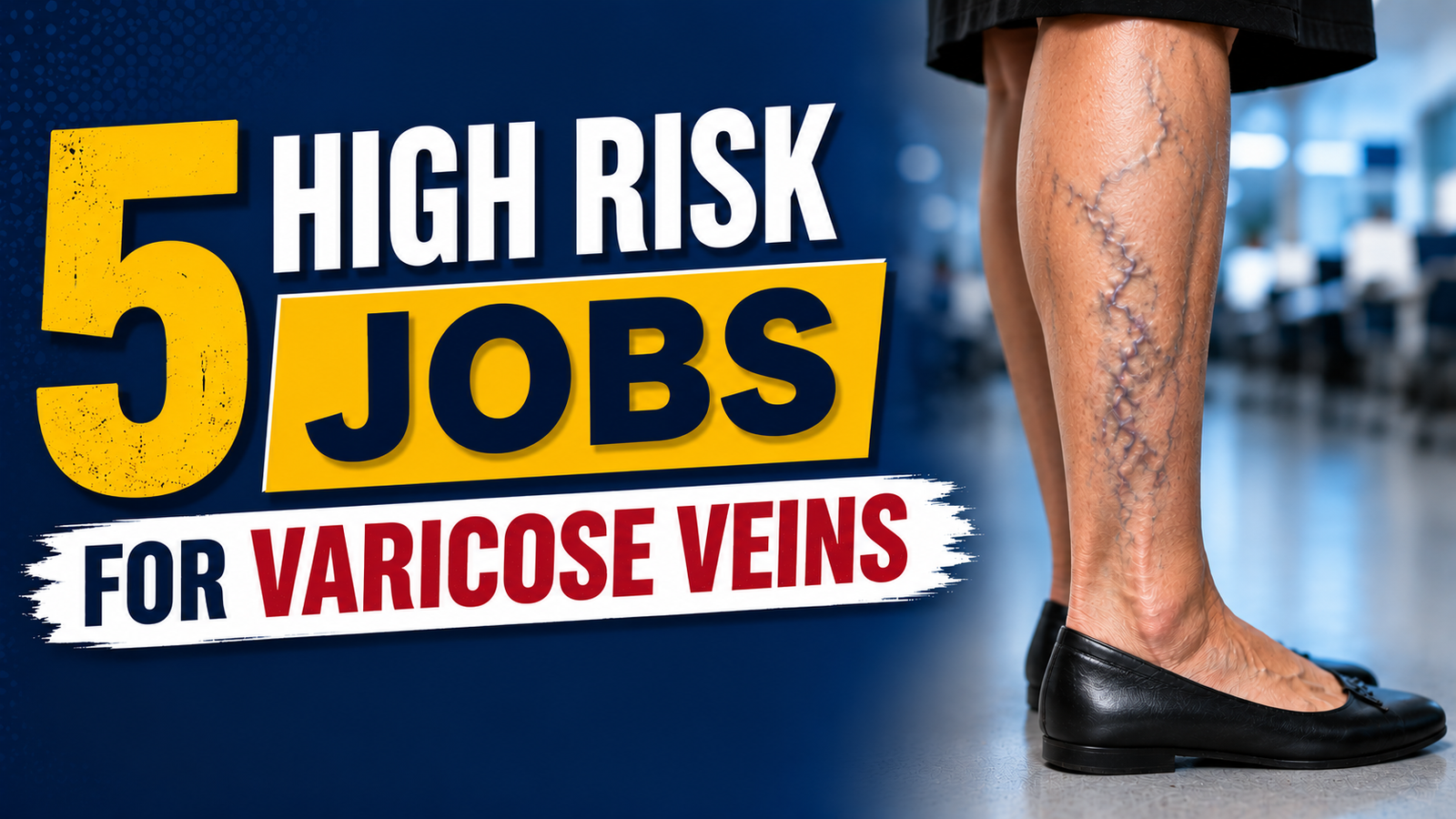
Discover 5 high risk jobs for varicose veins and learn how prolonged standing or sitting can affect vein health. Most people associate varicose veins with age, pregnancy, or genetics. But there is one major risk factor that millions of working Indians overlook every single day – their job.
The way you spend 8 to 10 hours at work has a direct and powerful impact on your vein health. Certain occupations force your body into positions that make it extremely difficult for blood to flow efficiently from your legs back up to your heart. Over months and years, this constant pressure weakens vein walls and damages the tiny valves inside your veins – leading to varicose veins.
In fact, studies show that people in high-risk occupations are significantly more likely to develop varicose veins compared to those in physically balanced jobs.
So which jobs are the biggest culprits? And what can you do to protect yourself?
The vascular surgery expert at Medfine Hospital, BTM Layout, Bangalore break it all down for you.
Why Does Your Job Affect Your Veins?
To understand the connection between your occupation and varicose veins, you first need to understand how veins work.
Your heart pumps blood downward to your legs through arteries. Veins then have to push that blood back upward – against gravity – to return it to the heart. To do this, veins rely on:
- One-way valves that open and close to prevent blood from flowing backward
- Muscle contractions in your calves that act like a pump, squeezing blood upward with every step you take
When you stand or sit in one position for long periods, two things happen:
- Your calf muscles stop contracting – the pump stops working
- Blood pools in the lower legs and feet, increasing pressure on vein walls
Over time, this repeated pressure stretches the vein walls, damages the valves, and causes veins to bulge – giving you varicose veins.
Job 1: Teachers and Educators
Why it is high risk: Teaching is one of the most varicose vein-prone professions in India, yet it is rarely talked about. Teachers spend the majority of their working hours standing in one fixed position – in front of a classroom, at a blackboard, or at a podium.
Unlike a factory worker or a nurse who moves constantly, a teacher stands relatively still for hours. The calf muscle pump barely activates, and blood pools relentlessly in the lower legs.
Additional risk factors for teachers:
- Long hours on hard floors with minimal footwear support
- Limited breaks during school hours
- Female teachers face compounded risk due to hormonal factors
Warning signs to watch for: Leg heaviness and tiredness after school hours, visible veins on the calves, ankle swelling by end of day.
Job 2: IT Professionals and Software Engineers
Why it is high risk: Bangalore is India’s IT capital – and ironically, one of the cities where varicose veins are increasingly common among young working professionals. The reason is simple: prolonged sitting.
Software engineers, data analysts, designers, and other desk-based professionals spend 8 to 12 hours a day seated at a workstation. When you sit for extended periods – especially with crossed legs or in a slouched posture – blood circulation in the lower limbs slows down dramatically.
The pressure on the backs of the thighs from a chair seat also compresses veins and restricts blood flow upward.
Additional risk factors for IT professionals:
- Sedentary lifestyle outside of work as well
- Late-night work shifts disrupting circulation rhythms
- Lack of regular walking or exercise
- High-stress environments that contribute to poor posture
Warning signs to watch for: A feeling of restlessness or cramping in the legs after long sitting sessions, visible blue veins on the legs, mild swelling around the ankles.
Tip for IT professionals: Follow the 20-20 rule – every 20 minutes, stand up and walk for at least 2 minutes. This alone can significantly reduce your varicose vein risk.
Job 3: Surgeons, Nurses, and Healthcare Workers
Why it is high risk: The people who treat varicose veins are often at high risk of developing them themselves. Surgeons stand for hours during complex procedures. Nurses are on their feet for 8 to 12-hour shifts, constantly moving between patients, wards, and operation theatres.
Unlike teachers who stand still, healthcare workers are constantly on their feet – which sounds healthier, but the sheer duration and intensity of standing without adequate rest still puts enormous pressure on the venous system.
Additional risk factors for healthcare workers:
- Overnight and rotating shifts that disrupt sleep and recovery
- High-stress environment leading to poor self-care
- Female-dominated workforce with additional hormonal risk factors
- Rarely taking breaks during demanding shifts
Warning signs to watch for: Persistent leg fatigue, aching or throbbing pain in the calves after shifts, visible twisted veins, ankle swelling that does not resolve after rest.
Job 4: Retail Workers, Salespeople, and Security Guards
Why it is high risk: Retail staff, showroom salespeople, bank tellers, security guards, and hotel front-desk executives share a common challenge – they are required to stand in one spot for their entire shift, often on hard marble or tiled floors, with little opportunity to sit or move around freely.
This is arguably the highest-risk category of all because the combination of prolonged static standing + hard surfaces + inadequate footwear creates the perfect storm for varicose vein development.
Security guards, in particular, often stand for 8 to 12 hours straight in the same position – sometimes in uncomfortable shoes – with minimal movement.
Additional risk factors:
- Lack of anti-fatigue mats or proper footwear
- No formal breaks in many workplaces
- Carrying excess weight that adds pressure to leg veins
- Hot working environments (malls, factories) that cause veins to dilate
Warning signs to watch for: Aching, heavy legs at the end of every shift, visible bulging veins on the legs or feet, persistent ankle swelling.
Job 5: Hair Stylists and Salon Professionals
Why it is high risk: Hair stylists, barbers, beauticians, and nail technicians spend virtually their entire working day on their feet – bending, reaching, and standing over clients. What makes this profession particularly risky is the combination of prolonged standing and repetitive awkward postures that restrict normal blood circulation.
The constant weight shifting and awkward bending positions also place uneven pressure on the legs and feet, accelerating vein damage over time.
Additional risk factors for salon professionals:
- Long working hours – often 10 to 12 hours a day
- Wearing heeled footwear that strains calf muscles
- Working on hard flooring with no supportive matting
- Mostly female workforce with added hormonal risk
Warning signs to watch for: Persistent foot and leg pain after work, visible spider veins or larger varicose veins on legs, burning or itching sensation around the veins.
Are You in a High-Risk Job? Here is What You Can Do
If you work in any of the occupations listed above, you do not have to simply accept varicose veins as an occupational hazard. These practical steps can significantly reduce your risk:
At Work:
- Take movement breaks every 30–40 minutes – even a 2-minute walk makes a difference
- Wear compression stockings – ask your doctor for the right grade; these support vein function throughout the day
- Invest in good footwear – supportive, low-heeled shoes reduce calf strain
- Use anti-fatigue mats if you stand for long hours
- Elevate your feet during lunch breaks whenever possible
- Avoid crossing your legs while sitting – it restricts blood flow
At Home:
- Elevate your legs above heart level for 15–20 minutes after work every day
- Exercise regularly – swimming, cycling, and walking are particularly good for vein health
- Maintain a healthy weight – excess weight dramatically increases pressure on leg veins
- Stay well hydrated – dehydration thickens blood and slows circulation
- Eat a fiber-rich diet and avoid excessive salt, which causes fluid retention and swelling
When Should You See a Doctor?
Early intervention makes a huge difference in varicose vein treatment. Do not wait until the condition becomes severe. See a vascular surgeon if you notice:
- Visible twisted, bulging, or dark blue veins on your legs
- Persistent leg heaviness, aching, or swelling that does not improve with rest
- Skin discoloration or hardening around the ankle area
- Itching or burning sensation over the veins
- Any open wound or ulcer near the ankle that is slow to heal
- Sudden severe pain or redness over a varicose vein
Remember – varicose veins are a progressive condition. They do not get better on their own. The earlier you treat them, the simpler, faster, and more affordable the treatment.
Varicose Veins Treatment at Medfine Hospital, Bangalore
At Medfine Hospital, BTM Layout, Bangalore, we specialize in advanced laser treatment for varicose veins (EVLT – Endovenous Laser Treatment) – the gold standard in modern vascular surgery.
Why patients across Bangalore choose Medfine:
- Completely painless laser procedure
- Day-care surgery – go home the same day
- No cuts, no stitches, no open wounds
- Resume normal work within 2–3 days
- USFDA-approved laser technology
- Experienced vascular surgeons with hundreds of successful procedures
- Transparent pricing – no hidden costs
- Conveniently located in BTM Layout, South Bangalore
Whether you are a teacher, an IT professional, a nurse, or a retail worker – if your job puts you at risk, we are here to help.
Frequently Asked Questions
Can young people in IT jobs get varicose veins?
Yes. Varicose veins are no longer just an older person’s condition. IT professionals in their 20s and 30s are increasingly being diagnosed due to prolonged sitting and sedentary lifestyles.
Do compression stockings really prevent varicose veins?
Compression stockings do not cure varicose veins but they significantly reduce the risk of progression and provide relief from symptoms like heaviness and swelling. They are especially recommended for people in high-risk jobs.
Is varicose vein laser surgery covered by insurance?
Many health insurance policies in India cover varicose vein laser surgery when it is medically indicated. It is advisable to check with your insurer before treatment.
How long does varicose vein laser treatment take?
The procedure typically takes 30 to 60 minutes and is performed as a day-care surgery. Most patients return to normal activity within 2–3 days.
Can lifestyle changes alone reverse varicose veins?
Lifestyle changes can slow progression and relieve symptoms, but they cannot reverse varicose veins that have already formed. Medical treatment is required to eliminate existing varicose veins.
Conclusion
Your job should not cost you your health. Whether you spend your days standing in a classroom, sitting at a workstation, working long retail shifts, or caring for patients – understanding your occupational risk is the first step toward protecting your vein health.
Do not ignore those aching, heavy legs at the end of the day. They are your body’s way of telling you something is wrong.
Working in a high-risk job and concerned about varicose veins? Consult our vascular surgery experts at Medfine Hospital, BTM Layout, Bangalore. Book your free consultation today