

Introduction
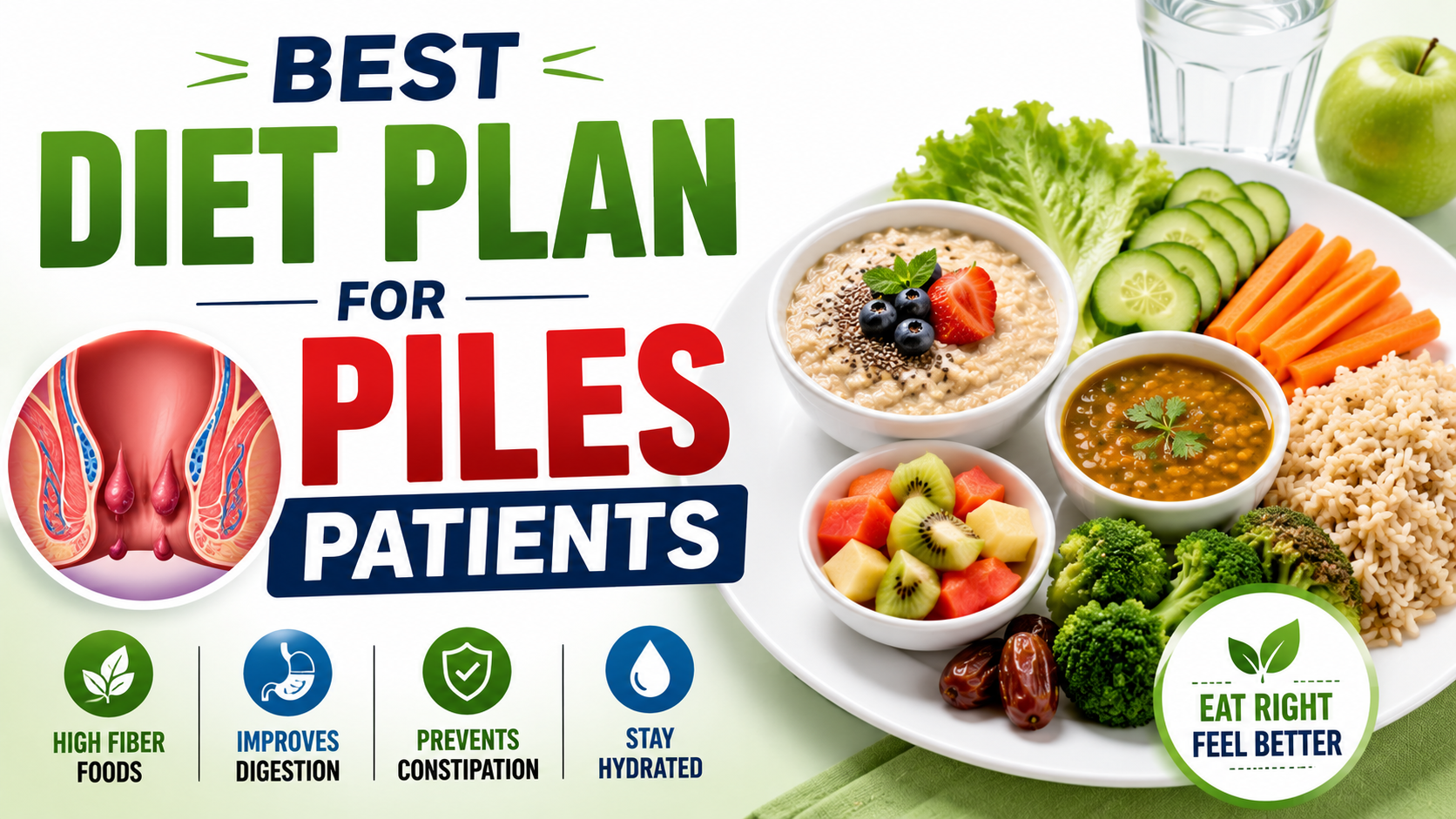
Piles, also known as hemorrhoids, affect millions of people across India. While medical treatment is often necessary, what you eat every day plays a huge role in managing – and even preventing – piles. The right diet plan for piles can reduce pain, stop bleeding, ease bowel movements, and prevent the condition from getting worse.
In this guide, the doctors at Medfine Hospital, Bangalore share a complete, easy-to-follow diet plan for piles patients – covering what to eat, what to avoid, and simple daily habits that make a real difference.
Why Does Diet Matter So Much in Piles?
The root cause of most piles cases is chronic constipation – straining during bowel movements puts excessive pressure on the veins in the rectum and anus, leading to swelling and inflammation.
Your diet directly controls:
- How soft or hard your stools are
- How frequently you pass stools
- The amount of strain on your rectal veins
- Inflammation levels in your body
A fiber-rich, well-hydrated diet is the single most powerful lifestyle change a piles patient can make – and it costs almost nothing.
Foods to Eat: The Best Diet Plan for Piles
- High-Fiber Fruits
Fruits are your best friend when you have piles. They are rich in dietary fiber and water content, both of which soften stools and promote easy bowel movements.
Best fruits for piles patients:
- Papaya (especially raw papaya)
- Banana
- Pear
- Apple (with skin)
- Guava
- Figs (anjeer)
- Oranges and other citrus fruits
Tip: Eat fruits in the morning on an empty stomach for best results.
- Vegetables Rich in Fiber
Green leafy vegetables and fiber-rich veggies add bulk to your stool, making it easier to pass without straining.
Best vegetables for piles:
- Spinach (palak)
- Broccoli
- Carrots
- Sweet potato
- Bottle gourd (lauki)
- Ridge gourd (tori)
- Beetroot
Tip: Steam or lightly cook vegetables rather than deep-frying to retain fiber content.
- Whole Grains and Legumes
Replace refined grains (white rice, maida) with whole grains that keep digestion smooth and regular.
Best whole grains and legumes:
- Brown rice
- Oats
- Whole wheat roti
- Barley (jau)
- Moong dal
- Masoor dal
- Rajma and chickpeas (in moderate amounts)
- Plenty of Water and Fluids
Fiber works best only when you drink enough water. Without adequate hydration, even a high-fiber diet can cause constipation.
Daily fluid recommendations for piles patients:
- Drink at least 8–10 glasses of water per day
- Coconut water (excellent for digestion)
- Buttermilk (chaas) – cooling and probiotic-rich
- Herbal teas like ginger or chamomile
- Fresh fruit juices (without added sugar)
Tip: Start your morning with a glass of warm water with lemon – it naturally stimulates bowel movement.
- Probiotic Foods
Probiotics support healthy gut bacteria, improve digestion, and reduce bloating – all helpful for piles patients.
Best probiotic foods:
- Curd (yogurt)
- Buttermilk
- Homemade pickles (in small quantities)
- Idli and dosa (fermented foods)
Foods to Avoid in Piles
Equally important is knowing what NOT to eat. The wrong foods can trigger constipation, inflammation, and worsen bleeding.
- Spicy and Oily Foods
Spicy food irritates the digestive tract and can cause or worsen anal burning and itching in piles patients. Deep-fried and oily foods are difficult to digest and slow down bowel movements.
Avoid:
- Chilli-heavy curries and chutneys
- Samosas, pakoras, vada pav
- Street food with excessive masala
- Refined and Processed Foods
Refined foods are stripped of natural fiber and cause hard, difficult-to-pass stools.
Avoid:
- White bread, maida-based products (naan, puri, biscuits)
- Instant noodles and pasta
- Packaged snacks and chips
- Pastries and cakes
- Red Meat
Red meat is low in fiber and high in fat, making it slow to digest. Regular consumption leads to constipation – a direct trigger for piles flare-ups.
Avoid or limit:
- Mutton and beef
- Processed meats like sausages and salami
- Alcohol and Caffeine
Both alcohol and excess caffeine dehydrate the body. Dehydration leads to harder stools and straining during bowel movements.
Avoid:
- Beer, wine, and spirits
- Excessive tea or coffee (more than 2 cups a day)
- Energy drinks and sodas
- Dairy Products (in Excess)
Full-fat dairy products like paneer, cheese, and whole milk can slow digestion and contribute to constipation when consumed in large quantities.
Limit:
- Whole milk in excess
- Cheese and butter
- Heavy cream-based dishes
Sample 1-Day Diet Plan for Piles Patients
Meal | What to Eat |
Early Morning | 1 glass warm water with lemon + 5 soaked figs or raisins |
Breakfast | Oats porridge or 2 whole wheat rotis with vegetable sabzi + 1 bowl curd |
Mid-Morning | 1 fruit (papaya, banana, or pear) |
Lunch | Brown rice / 2 whole wheat rotis + moong dal + steamed vegetables + buttermilk |
Evening Snack | A handful of soaked almonds + 1 cup herbal tea or coconut water |
Dinner | 2 whole wheat rotis + lauki or spinach sabzi + 1 bowl curd |
Bedtime | 1 glass warm milk with a pinch of turmeric (optional) |
Additional Lifestyle Tips for Piles Patients
Diet alone is not enough – combine it with these healthy habits for faster relief:
- Never ignore the urge to pass stools – delaying makes stools harder
- Avoid sitting on the toilet for too long – it increases pressure on rectal veins
- Exercise daily – even a 20–30 minute walk improves bowel regularity
- Avoid lifting heavy weights – it increases abdominal pressure
- Use a squat position if possible – it is more natural and reduces straining
- Maintain a healthy weight – obesity is a major risk factor for piles
When Diet Is Not Enough - Consider Medical Treatment
A good diet plan for piles can manage early-stage (Grade 1 and Grade 2) piles effectively. However, if you experience:
- Persistent rectal bleeding
- Severe pain or discomfort
- A lump protruding from the anus
- Piles that do not improve after dietary changes
…it is time to consult a specialist. Waiting too long can push your condition to an advanced grade that requires surgery.
At Medfine Hospital, BTM Layout, Bangalore, our expert proctologists offer advanced laser treatment for piles – a painless, day-care procedure with no cuts, no stitches, and recovery in just 2–3 days.
Frequently Asked Questions
Can diet alone cure piles permanently?
Diet can control and manage piles, especially in early stages. However, Grade 3 and Grade 4 piles usually require medical or surgical treatment alongside dietary changes.
Is banana good for piles?
Yes, banana is excellent for piles. It is rich in fiber and acts as a natural laxative, helping soften stools and ease bowel movements.
Is curd good for piles patients?
Yes, curd (yogurt) is beneficial for piles patients. It contains probiotics that support healthy digestion and reduce constipation.
How much water should a piles patient drink daily?
At least 8–10 glasses (2–2.5 liters) of water per day is recommended for piles patients to keep stools soft.
Which foods trigger piles flare-ups the most?
Spicy foods, deep-fried snacks, alcohol, refined grains, and red meat are the most common dietary triggers for piles flare-ups.
Conclusion
Following the right diet plan for piles is one of the easiest and most effective steps you can take to manage your condition and improve your quality of life. Load up on fiber-rich fruits, vegetables, and whole grains, drink plenty of water, and avoid spicy, oily, and processed foods.
However, remember that diet is a supporting tool – not a replacement for medical treatment in advanced cases.
Suffering from piles and looking for expert treatment in Bangalore? Book a free consultation at Medfine Hospital, BTM Layout →