
Introduction
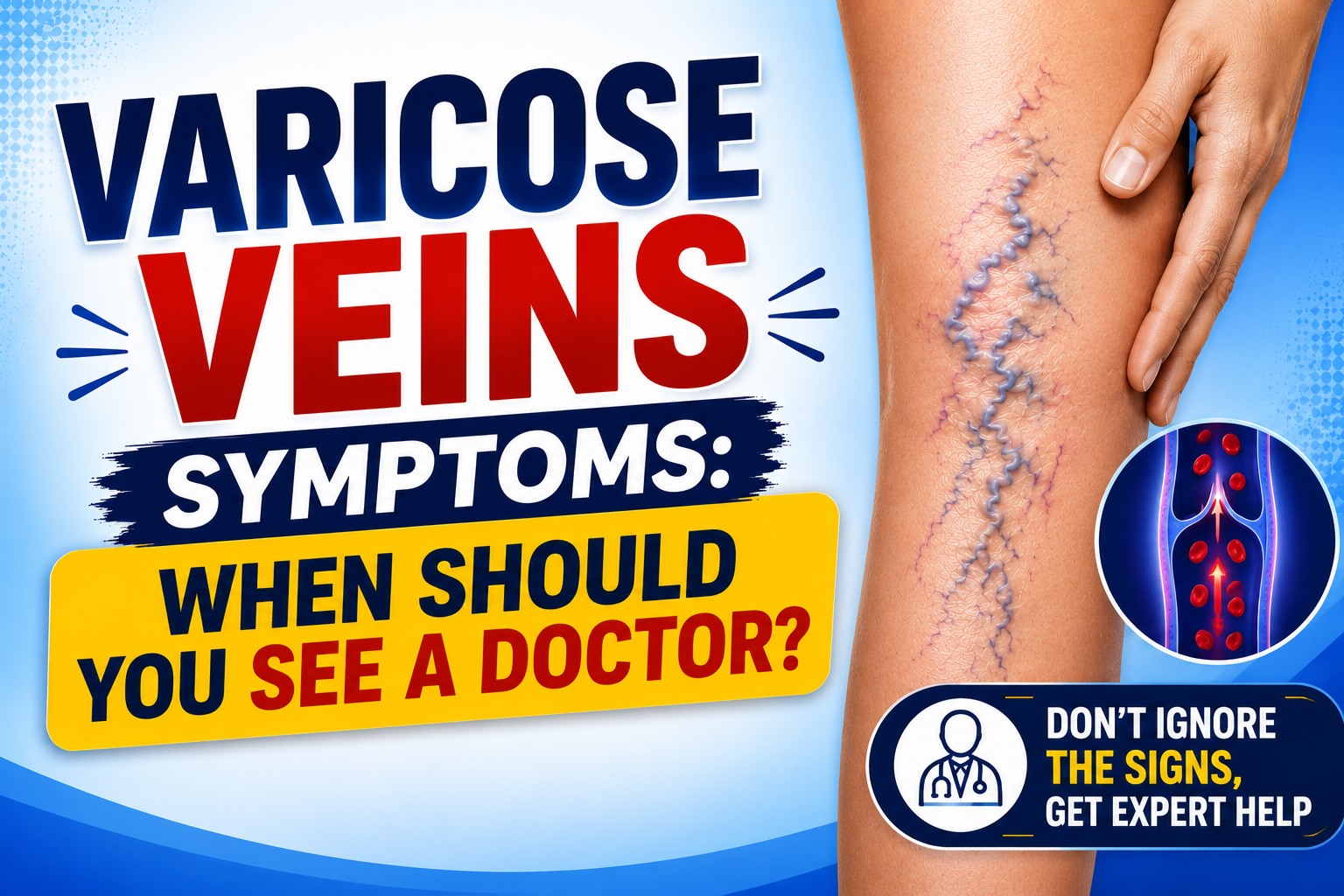
Varicose veins are enlarged, twisted, and bulging veins that appear just beneath the surface of the skin – most commonly on the legs and feet. They occur when the one-way valves inside your veins stop working properly, causing blood to pool and the vein walls to stretch and bulge outward.
While varicose veins can affect anyone, they are more common in:
- People who stand or sit for long hours (teachers, doctors, IT professionals, shopkeepers)
- Pregnant women
- Overweight or obese individuals
- People with a family history of varicose veins
- Those aged 40 and above
Experiencing leg pain, swelling, or visible twisted veins? Learn all varicose veins symptoms and know exactly when to see a doctor. Expert advice from Medfine Hospital, Bangalore.
Varicose Veins Symptoms
In the initial stages, varicose veins may not cause significant pain. However, your body gives you early warning signs that should not be ignored.
- Visible Twisted or Bulging Veins
The most obvious early sign is the appearance of dark blue or purple veins that look twisted, rope-like, or cord-like beneath the skin surface – usually on the calves or inner thighs.
Even if they do not hurt at this stage, their appearance alone is a signal that your vein valves are not functioning properly.
- Leg Heaviness and Fatigue
Many patients describe a persistent feeling of heaviness or tiredness in the legs, especially after standing or walking for extended periods. This happens because blood is pooling in the lower legs instead of flowing back up to the heart efficiently.
If your legs feel unusually heavy or worn out by afternoon or evening, varicose veins could be the reason.
- Mild Swelling Around the Ankles and Feet
Fluid buildup caused by poor circulation can lead to swelling (edema) around the ankles and feet, particularly at the end of a long day. This swelling usually reduces after resting with your legs elevated.
- Itching Around the Veins
A persistent itching or burning sensation around the affected veins is another early symptom. This occurs because the skin over varicose veins becomes irritated due to poor circulation and fluid leakage from the vein walls.
Many patients mistake this for a skin allergy or dry skin – but if the itching keeps coming back around the same area, varicose veins should be ruled out.
- Mild Aching or Throbbing Pain
A dull, aching or throbbing pain in the legs – especially after prolonged standing or sitting – is one of the most commonly reported early varicose veins symptoms. The pain typically improves when you walk around or elevate your legs.
Advanced Varicose Veins Symptoms
If early varicose veins symptoms are ignored, varicose veins can progress and cause more serious, noticeable problems.
- Muscle Cramps and Restless Legs
As varicose veins worsen, patients often experience sudden muscle cramps – especially at night – along with a restless, uncomfortable sensation in the legs that makes it difficult to sleep. This is sometimes called Restless Leg Syndrome and is closely linked to poor venous circulation.
- Skin Discoloration Around the Veins
In advanced cases, the skin around varicose veins may develop a brownish or reddish discoloration. This happens because red blood cells leak out of the weakened vein walls and break down under the skin, staining it permanently if not treated in time.
- Hardening or Thickening of Skin (Lipodermatosclerosis)
Chronic venous pressure can cause the skin around the lower legs and ankles to become hard, tight, and leathery – a condition called lipodermatosclerosis. This is a serious sign that the condition has been progressing for a long time without treatment.
- Varicose Eczema
The skin overlying varicose veins can become red, dry, flaky, and intensely itchy – resembling eczema. This is called varicose eczema or venous eczema and is a direct consequence of chronic poor circulation.
- Venous Ulcers
The most severe complication of untreated varicose veins is the development of venous (varicose) ulcers – open, slow-healing wounds that typically appear on the inner ankle. These ulcers are painful, prone to infection, and very difficult to treat without addressing the underlying varicose veins first.
If you have reached this stage, immediate medical attention is essential.
When Should You See a Doctor for Varicose Veins?
Many people delay seeing a doctor because their varicose veins “don’t hurt much.” This is a mistake. Here is a clear guide on when you must consult a vascular surgeon:
See a Doctor Immediately If You Have:
- Sudden, severe pain or swelling in one leg – this could be a sign of Deep Vein Thrombosis (DVT), a potentially life-threatening blood clot
- A varicose vein that has burst or is bleeding through the skin
- An open wound or ulcer near the ankle that is not healing
- Red, warm, and tender skin over a varicose vein – this may indicate superficial thrombophlebitis (inflammation with clotting)
See a Doctor Soon If You Have:
- Visible varicose veins that are growing larger or more painful over time
- Persistent leg swelling, heaviness, or cramps that affect your daily life or sleep
- Skin discoloration or hardening around the lower legs
- Itching or eczema that keeps recurring over the same area
- Varicose veins during pregnancy that are causing significant discomfort
You Can Schedule a Routine Consultation If:
- You have mild visible varicose veins with no pain but want to prevent progression
- You have a family history of varicose veins and want a preventive check-up
- You stand or sit for long hours at work and want to assess your risk
The golden rule: Do not wait for pain to become unbearable. Early-stage varicose veins are far easier, faster, and more affordable to treat than advanced-stage ones.
How Are Varicose Veins Diagnosed?
When you visit a vascular surgeon, the diagnosis typically involves:
- Physical examination – The doctor examines your legs while you are standing to assess the extent of visible varicose veins and swelling
- Venous Doppler Ultrasound – A painless, non-invasive scan that evaluates blood flow in your veins and identifies exactly which valves are not working properly. This is the gold standard for diagnosing varicose veins
The results guide the doctor in recommending the most appropriate treatment for your specific condition.
What is the Treatment for Varicose Veins?
At Medfine Hospital, Bangalore, we offer advanced laser treatment for varicose veins (EVLT – Endovenous Laser Treatment) – the most modern, minimally invasive solution available today.
What makes laser treatment better than traditional surgery?
- Completely painless procedure
- No cuts, no stitches, no open wounds
- Day-care procedure – go home the same day
- Resume normal activities within 2–3 days
- USFDA-approved laser technology
- Minimal risk of recurrence
Traditional open surgery for varicose veins involved large incisions, long hospital stays, and weeks of painful recovery. With laser treatment, all of that is eliminated.
Simple Tips to Prevent Varicose Veins from Getting Worse
While awaiting treatment or in early stages, these habits can slow the progression of varicose veins:
- Wear compression stockings as advised by your doctor
- Elevate your legs above heart level for 15–20 minutes twice daily
- Walk regularly – even a 30-minute daily walk significantly improves venous circulation
- Avoid standing or sitting in one position for more than 30–40 minutes at a stretch
- Maintain a healthy weight to reduce pressure on your leg veins
- Avoid crossing your legs while sitting
Varicose Veins Treatment at Medfine Hospital, Bangalore
At Medfine Hospital, BTM Layout, Bangalore, we specialize in advanced laser treatment for varicose veins (EVLT – Endovenous Laser Treatment) – the gold standard in modern vascular surgery.
Why patients across Bangalore choose Medfine:
- Completely painless laser procedure
- Day-care surgery – go home the same day
- No cuts, no stitches, no open wounds
- Resume normal work within 2–3 days
- USFDA-approved laser technology
- Experienced vascular surgeons with hundreds of successful procedures
- Transparent pricing – no hidden costs
- Conveniently located in BTM Layout, South Bangalore
Whether you are a teacher, an IT professional, a nurse, or a retail worker – if your job puts you at risk, we are here to help.
Frequently Asked Questions
Are varicose veins dangerous?
In early stages, varicose veins are more of a discomfort than a danger. However, if ignored, they can lead to serious complications like Deep Vein Thrombosis (DVT), bleeding, venous ulcers, and chronic skin damage.
Can varicose veins go away on their own?
No. Varicose veins do not disappear on their own. Lifestyle changes can slow their progression, but medical or laser treatment is needed to eliminate them permanently.
Is varicose vein laser treatment painful?
No. Laser treatment for varicose veins is performed under local anesthesia and is virtually painless. Most patients return to normal activities within 2–3 days.
Can varicose veins come back after treatment?
With advanced laser treatment, the recurrence rate is very low. However, maintaining a healthy lifestyle after treatment is important to prevent new veins from developing.
Are varicose veins common during pregnancy?
Yes. Pregnancy increases blood volume and puts added pressure on leg veins, making varicose veins very common. They often improve after delivery but should be monitored by a doctor.
What is the difference between varicose veins and spider veins?
Spider veins are smaller, thinner, and closer to the skin surface – usually red or blue in color. Varicose veins are larger, more bulging, and deeper. Both indicate venous insufficiency but varicose veins are more likely to cause serious symptoms.
Conclusion
Varicose veins are not just a cosmetic issue – they are a progressive medical condition that worsens over time if left untreated. From mild heaviness and itching in the early stages to dangerous blood clots and ulcers in advanced stages, the varicose veins symptoms tell a clear story: the sooner you act, the better.
If you recognize any of the symptoms described in this blog – no matter how mild – do not ignore them. A simple consultation with a vascular surgeon can give you complete clarity on your condition and the best path forward.
Experiencing varicose veins symptoms? Get expert care at Medfine Hospital, BTM Layout, Bangalore. Book your free consultation today →