

Introduction
Piles, also known as hemorrhoids, affect millions of people and are one of the most common anorectal conditions. They develop when veins inside the rectum or around the anus become swollen due to increased pressure. Symptoms such as bleeding during bowel movements, pain, swelling, burning sensation, itching, and discomfort while sitting often become worse when constipation develops.
Although medicines and procedures help manage piles, diet remains one of the most important parts of treatment and recovery. The foods consumed every day directly influence stool consistency, bowel regularity, digestive health, and pressure on rectal veins.
Many patients focus only on medications but continue eating foods that worsen constipation. This often delays recovery and increases symptom recurrence.
Choosing the right foods during piles treatment helps improve bowel movements, reduce strain, support healing, and lower the chances of recurrence.
Why Diet Is Important During Piles Treatment
Diet and piles are closely connected because most symptoms worsen when bowel movements become difficult.
One of the main reasons piles progress is constipation and repeated straining during stool passage. Hard stools force patients to apply more pressure during bowel movements, increasing stress on already swollen hemorrhoids.
This increased pressure may lead to:
- More bleeding
- Increased pain and swelling
- Burning sensation
- Irritation around the anus
- Progression of piles stages
A proper diet for piles patients aims to:
✔ Keep stools soft
✔ Prevent constipation
✔ Reduce bowel strain
✔ Improve digestion
✔ Support healing
✔ Reduce recurrence risk
This is why dietary management remains important both during treatment and after recovery.
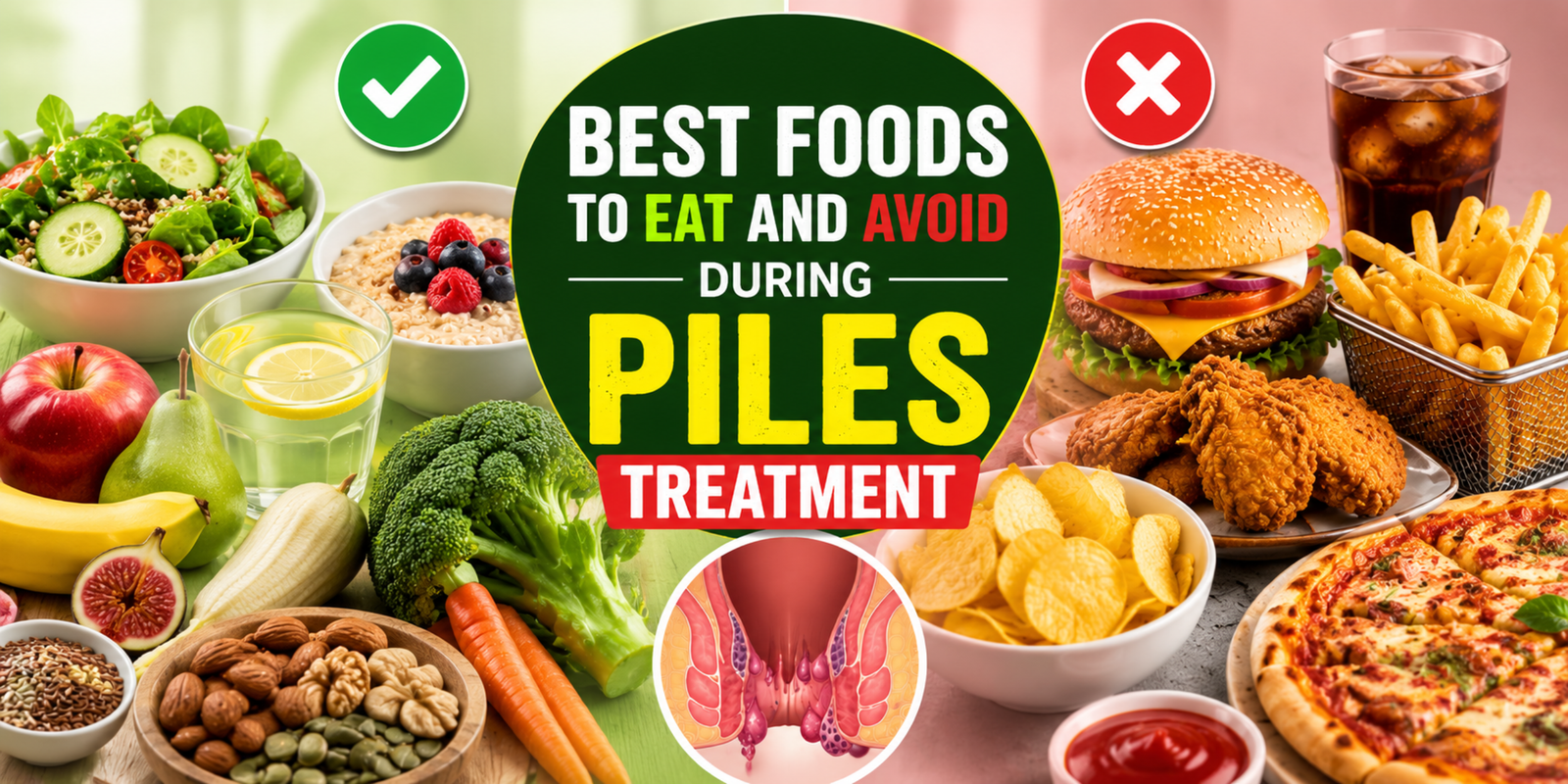
Best Foods to Eat During Piles Treatment
High-Fiber Fruits
Fruits are among the best foods during piles treatment because they contain fiber, water, vitamins, antioxidants, and natural sugars that support digestion.
Recommended fruits include:
- Papaya
- Banana
- Apple (with skin)
- Guava
- Pear
- Orange
- Berries
How Do Fruits Help During Piles Treatment?
Fiber improves stool bulk and helps stools move smoothly through the intestine.
- Papaya supports digestion and reduces constipation naturally.
- Bananas help soften stools and reduce pressure during bowel movements.
- Guava and apples provide both soluble and insoluble fiber, improving stool consistency.
Fruits also provide hydration, which supports easier bowel movements.
Regular fruit intake may help reduce constipation-related strain and improve recovery.
Fiber-Rich Vegetables
Vegetables are important because they increase stool volume while supporting digestion.
Recommended vegetables include:
- Spinach
- Broccoli
- Beetroot
- Pumpkin
- Bottle gourd
- Carrots
- Cucumber
Why Are Vegetables Beneficial for Piles Patients?
Vegetables contain:
- Dietary fiber
- Water content
- Vitamins
- Minerals
- Antioxidants
Leafy vegetables improve intestinal movement and reduce constipation.
Pumpkin and bottle gourd are often preferred because they are easy to digest and gentle on the digestive tract.
Including vegetables in daily meals helps maintain bowel regularity.
Whole Grains and Complex Carbohydrates
Many people consume refined carbohydrates daily without realising their effect on digestion.
Replacing refined foods with whole grains improves fiber intake significantly.
Recommended foods include:
- Oats
- Brown rice
- Whole wheat
- Barley
- Millets
- Quinoa
Benefits During Piles Treatment
Whole grains:
- Improve stool softness
- Support regular bowel movements
- Reduce constipation
- Lower bowel strain
Oats, especially, contain soluble fiber that supports smoother digestion.
Replacing white rice and refined flour products with whole grains can improve bowel habits.
Legumes and Pulses
Legumes are excellent sources of fiber and plant protein.
Recommended foods:
- Lentils
- Chickpeas
- Kidney beans
- Green gram
- Black beans
How Do Legumes Help?
Fiber increases stool bulk and reduces constipation.
Protein supports tissue recovery and healing.
Patients prone to gas or bloating may increase intake gradually.
Water and Fluids
Increasing fiber without increasing fluids may actually worsen constipation.
Hydration is therefore equally important.
Recommended fluids include:
- Water
- Coconut water
- Buttermilk
- Soups
- Fresh juices
Why Is Hydration Important During Piles Treatment?
Water softens stools.
Soft stools reduce pressure during bowel movements and decrease strain on hemorrhoids.
Good hydration also supports recovery after procedures.
Probiotic Foods
Gut health influences bowel regularity.
Probiotic foods support healthy intestinal bacteria and improve digestion.
Recommended foods include:
- Curd
- Yogurt
- Buttermilk
- Fermented foods
These foods may help improve bowel movement regularity and reduce constipation.
Foods to Avoid During Piles Treatment
Highly Processed Foods
Processed foods are usually low in fiber and often worsen constipation.
Examples include:
- White bread
- Bakery products
- Chips
- Instant noodles
- Packaged snacks
These foods slow digestion and increase stool hardness.
Deep-Fried Foods
Deep-fried foods are harder to digest and may worsen bowel irregularity.
Examples:
- Fries
- Fast foods
- Fried snacks
Frequent intake may increase digestive discomfort.
Excessively Spicy Foods
Very spicy foods may worsen irritation and burning sensation in some individuals.
Foods often limited include:
- Excess chilli preparations
- Spicy fast foods
- Processed spicy snacks
Tolerance differs between individuals.
Excess Tea, Coffee, and Alcohol
Excess caffeine and alcohol may contribute to dehydration.
Reduced hydration increases stool hardness and worsens constipation.
Moderation is recommended.
Refined Carbohydrates
Refined foods often contain little fiber.
Examples include:
- White rice (excess intake)
- Refined flour products
- Sugary baked foods
Replacing them with whole grains may improve bowel regularity.
Can Diet Alone Treat Piles?
Diet improves symptoms significantly, especially during early stages.
However, advanced piles may still require medical evaluation.
Consult a doctor if symptoms include:
- Persistent bleeding
- Severe pain
- Prolapse
- Swelling
- Difficulty sitting
Medical care becomes important when symptoms continue despite dietary changes.
Advanced Piles Treatment in Bangalore
Medfine Hospitals provides advanced piles treatment in Bangalore, combining stage-based care, dietary guidance, and minimally invasive treatment options.
Treatment focuses on symptom relief, faster recovery, and long-term management.
Learn more here:
👉 Piles Treatment in Bangalore
Frequently Asked Questions
What are the best foods to eat during piles treatment?
The best foods during piles treatment are usually high-fiber foods that help soften stools and reduce constipation. These include papaya, banana, apple, guava, leafy vegetables, whole grains, lentils, and probiotic foods such as curd and yogurt. Adequate hydration is equally important for smoother bowel movements.
Which fruits are good for piles patients?
Fruits rich in fiber and water content are generally beneficial during piles treatment. Commonly recommended options include:
- Papaya
- Banana
- Apple (with skin)
- Guava
- Pear
- Orange
These fruits help improve digestion, reduce constipation, and support easier bowel movements.
Which foods should be avoided during piles treatment?
Patients with piles are often advised to limit foods that may worsen constipation or digestive discomfort, including:
- Processed foods
- Deep-fried foods
- Excessively spicy foods
- Refined flour products
- Packaged snacks
- Excess alcohol and caffeine
Reducing these foods may help improve symptoms.
How much water should piles patients drink daily?
Adequate hydration is important because water helps soften stools and reduces strain during bowel movements. Although needs vary, most adults are generally encouraged to maintain good daily fluid intake, especially while increasing fiber consumption.
Can diet alone treat piles without surgery?
Dietary changes can significantly improve symptoms, particularly in early-stage piles, by reducing constipation and bowel strain. However, advanced piles with persistent bleeding, prolapse, severe pain, or swelling may require medical treatment.
Can a high-fiber diet help prevent piles recurrence?
Yes. A fiber-rich diet for piles helps maintain regular bowel movements, reduce constipation, and lower pressure on rectal veins. Combined with hydration and healthy lifestyle habits, it may help reduce the chances of recurrence.
Conclusion
Diet plays an important role during piles treatment because it directly influences constipation, digestion, stool consistency, and pressure on rectal veins. Choosing fiber-rich foods for piles, including fruits, vegetables, whole grains, fluids, and probiotic foods, helps improve bowel movements and supports recovery.
At the same time, limiting processed foods, fried foods, excessive spicy foods, and low-fiber diets may help prevent worsening of symptoms.
Although diet improves symptoms, persistent problems such as bleeding, severe pain, prolapse, or swelling should not be ignored. Early medical care combined with dietary management often provides the best outcomes.