

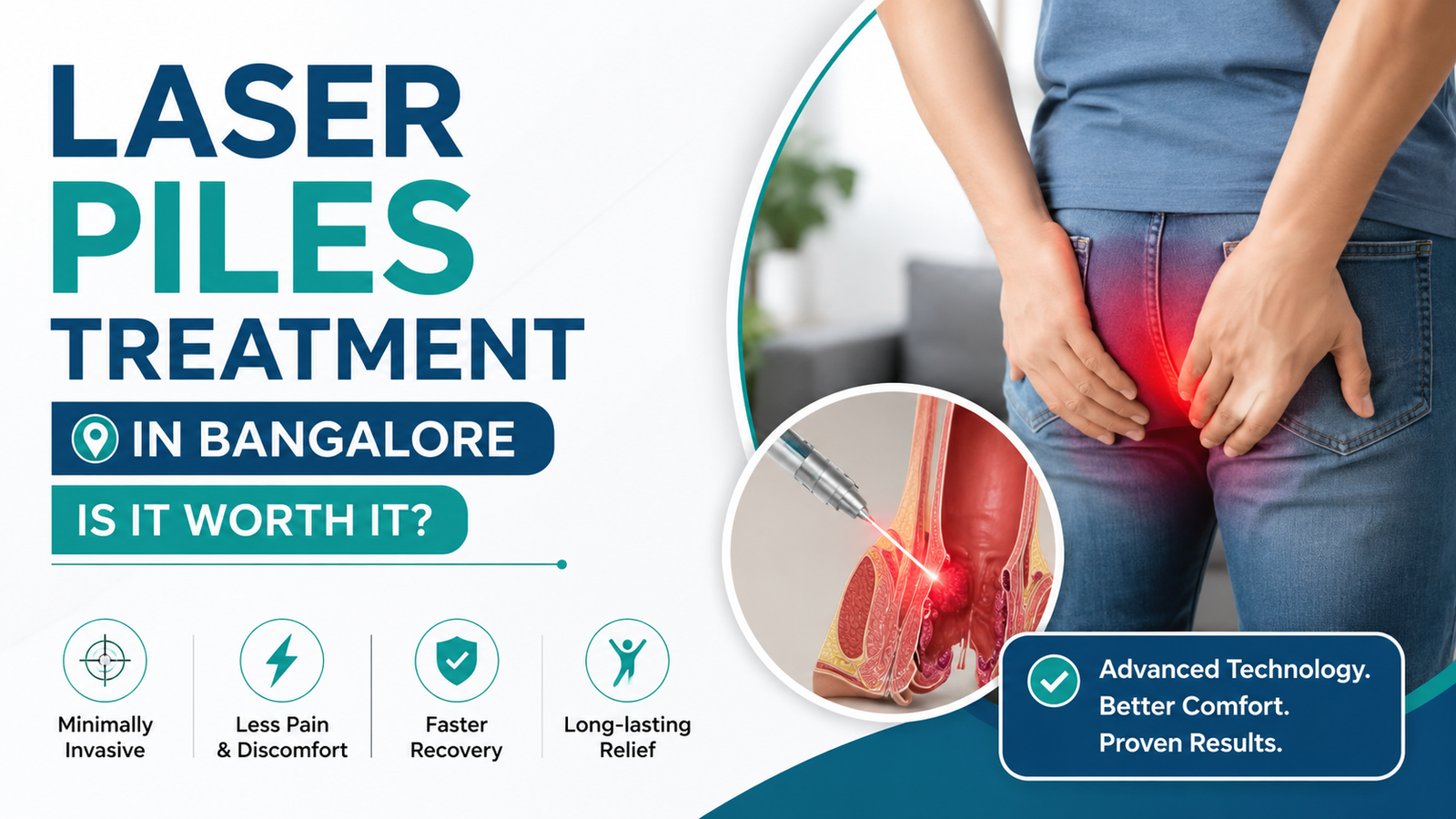
Piles, also known as hemorrhoids, affect millions of people and are among the most common anorectal conditions. Symptoms such as bleeding during bowel movements, pain, swelling, itching, burning sensation, mucus discharge, and difficulty sitting can significantly affect daily life.
For many years, conventional surgery was considered the standard treatment for advanced piles. However, with medical advancements, laser piles treatment has emerged as a modern and minimally invasive option.
One of the most common questions patients ask today is:
“Is laser piles treatment worth it?”
The answer depends on several factors, including the stage of piles, symptom severity, recovery expectations, and patient preferences. Understanding how laser treatment works, its benefits, limitations, and who may benefit helps patients make informed decisions.
What Is Laser Piles Treatment?
Laser piles treatment is a minimally invasive procedure that uses focused laser energy to treat hemorrhoids by shrinking or reducing the affected tissue.
Unlike conventional open surgery, laser procedures aim to treat piles with:
- Less tissue damage
- Reduced bleeding
- Minimal pain
- Faster recovery
- Shorter hospital stay
The treatment primarily focuses on reducing blood supply to hemorrhoids, allowing the tissue to shrink gradually.
Because surrounding tissues are preserved more effectively, recovery is often quicker compared to traditional approaches.
How Does Laser Treatment for Piles Work?
Laser treatment works by directing controlled energy toward hemorrhoidal tissue.
The laser energy helps:
- Shrink enlarged hemorrhoids
- Reduce blood flow to swollen veins
- Minimise tissue trauma
- Control bleeding
Unlike traditional surgery where larger incisions may be required, laser procedures generally involve less disruption of surrounding tissues.
This is one reason many patients consider laser treatment more comfortable.
Who May Benefit From Laser Piles Treatment?
Laser piles treatment may be considered for patients with:
- Persistent bleeding piles
- Recurrent symptoms
- Grade 2 or Grade 3 piles
- Prolapsed hemorrhoids
- Pain affecting daily life
- Failure of conservative treatment
Patients who continue experiencing symptoms despite:
- Diet correction
- Medications
- Lifestyle modification
may require procedural treatment.
However, suitability always depends on clinical evaluation.
Benefits of Laser Piles Treatment
Reduced Pain and Discomfort
One of the biggest reasons patients prefer laser treatment is reduced postoperative pain.
Traditional piles surgery may involve more tissue handling.
Laser treatment generally causes:
- Less trauma
- Reduced pain
- Better comfort during recovery
This improves the overall patient experience.
Minimal Bleeding
Laser energy helps seal blood vessels while treating hemorrhoids.
This often results in:
- Less intraoperative bleeding
- Better visibility during treatment
- Reduced blood loss
Minimal bleeding contributes to smoother recovery.
Faster Recovery
Recovery time is one of the biggest concerns among piles patients.
Many patients undergoing laser treatment experience:
- Earlier return to work
- Shorter recovery period
- Faster resumption of daily activities
Recovery varies depending on stage and overall health.
Short Hospital Stay
Laser procedures are often associated with shorter hospital stay compared to conventional surgery.
Some patients may return home earlier depending on:
- Procedure complexity
- Recovery status
- Clinical condition
This improves convenience.
Lower Tissue Damage
Laser treatment focuses energy precisely on target tissues.
This reduces injury to surrounding structures and may improve healing.
Preserving healthy tissue remains an important advantage.
Is Laser Piles Treatment Permanent?
One of the biggest misconceptions is that laser treatment permanently prevents recurrence in every patient.
Laser treatment addresses hemorrhoids effectively, but long-term outcomes also depend on lifestyle.
Recurrence may still occur if patients continue:
- Chronic constipation
- Low-fiber diet
- Prolonged sitting
- Poor hydration
- Repeated straining
Long-term success therefore depends on combining treatment with lifestyle correction.
How Does Laser Compare With Traditional Piles Surgery?
Pain Levels
Laser treatment is often associated with less discomfort because tissue injury is usually lower.
Traditional surgery may involve greater tissue handling.
Recovery
Laser procedures generally aim for quicker recovery and earlier activity resumption.
Traditional surgery may require longer recovery in some patients.
Bleeding
Laser procedures often involve minimal bleeding due to vessel sealing effects.
Hospital Stay
Hospital stay is often shorter with minimally invasive treatment approaches.
Can Piles Be Managed Without Laser?
Yes.
Early-stage piles often improve through:
- Diet Correction
Increasing fiber helps soften stools.
- Recommended foods include:
- Fruits
- Vegetables
- Whole grains
- Hydration
- Adequate water intake reduces constipation.
- Lifestyle Modification
- Exercise, bowel habit correction, and reducing prolonged sitting help improve symptoms.
- However, advanced piles may still require procedural treatment.
Are There Any Limitations to Laser Treatment?
Laser treatment may not be ideal for every patient.
Treatment selection depends on:
- Grade of piles
- Symptom severity
- Prolapse extent
- Previous treatment history
Advanced evaluation remains important before choosing treatment.
Advanced Laser Piles Treatment in Bangalore
Medfine Hospitals provides advanced laser piles treatment in Bangalore, combining stage-based evaluation, minimally invasive procedures, and comprehensive care planning.
Treatment focuses on:
- Accurate diagnosis
- Reduced discomfort
- Faster recovery
- Long-term symptom control
Conclusion
Laser piles treatment has become a modern alternative for many patients seeking less pain, minimal bleeding, shorter recovery, and faster return to daily activities.
For selected patients, especially those with persistent symptoms or recurrent piles, laser treatment may provide effective relief while avoiding conventional surgery.
However, permanent success depends not only on treatment but also on correcting factors such as constipation, poor diet, prolonged sitting, and bowel habits.
Early evaluation and stage-based treatment remain the best approach.
Frequently Asked Questions
Is laser piles treatment painful?
Laser treatment is generally associated with less pain compared to traditional surgery because tissue injury is reduced.
How long does recovery take after laser piles treatment?
Recovery varies, but many patients return to daily activities earlier compared to conventional procedures.
Is laser treatment permanent for piles?
Laser treats haemorrhoids effectively, but recurrence prevention also depends on lifestyle changes.
Who is eligible for laser piles treatment?
Patients with persistent symptoms, recurrent piles, Grade 2 or Grade 3 hemorrhoids may be evaluated.
Can early piles be treated without laser?
Yes. Early piles often improve with diet correction, hydration, and lifestyle changes.
Is hospital stay required after laser piles treatment?
Hospital stay is often shorter compared to traditional surgery, depending on individual recovery.