

Introduction
Anal fissures are small tears in the lining of the anus that can cause pain, bleeding during bowel movements, and significant discomfort. These fissures often develop due to constipation, straining, or passing hard stools, making diet and lifestyle critical factors in both prevention and healing.
At Medfine Hospitals, we offer guidance that combines the right diet, healthy lifestyle habits, and medical care to help patients recover safely and prevent recurrence. Our approach focuses on softening stools, reducing irritation, and promoting faster healing.
This comprehensive guide covers everything you need to know about diet for anal fissures, foods to avoid, do’s & don’ts, lifestyle tips, practical home remedies, and medical care options. By following these strategies, patients can achieve long-term relief and improved gut health.
Why Diet Matters for Anal Fissures
Anal fissures are often triggered or worsened by constipation and straining during bowel movements. When stools are hard and difficult to pass, the delicate lining of the anus can tear, leading to pain, bleeding, and delayed healing.
A proper diet plays a crucial role in managing and preventing anal fissures by:
- Promoting soft stools: A high-fiber diet helps regulate bowel movements, making stools easier to pass and reducing the risk of further tearing.
- Supporting gut health: Fiber-rich foods feed beneficial gut bacteria, improving digestion and preventing constipation—a key factor in fissure formation.
- Reducing inflammation and discomfort: Certain foods can soothe the digestive tract and reduce irritation around the anal region.
- Enhancing healing: Adequate nutrition supports tissue repair and faster recovery of the fissured lining.
Practical takeaway: Incorporating fiber, staying hydrated, and eating gut-friendly meals form the foundation of an effective anal fissure diet plan.
Foods to Eat for Anal Fissure Healing
Eating the right foods can speed up healing, reduce pain, and prevent recurrence of anal fissures. A diet that promotes soft stools, gut health, and hydration is essential.
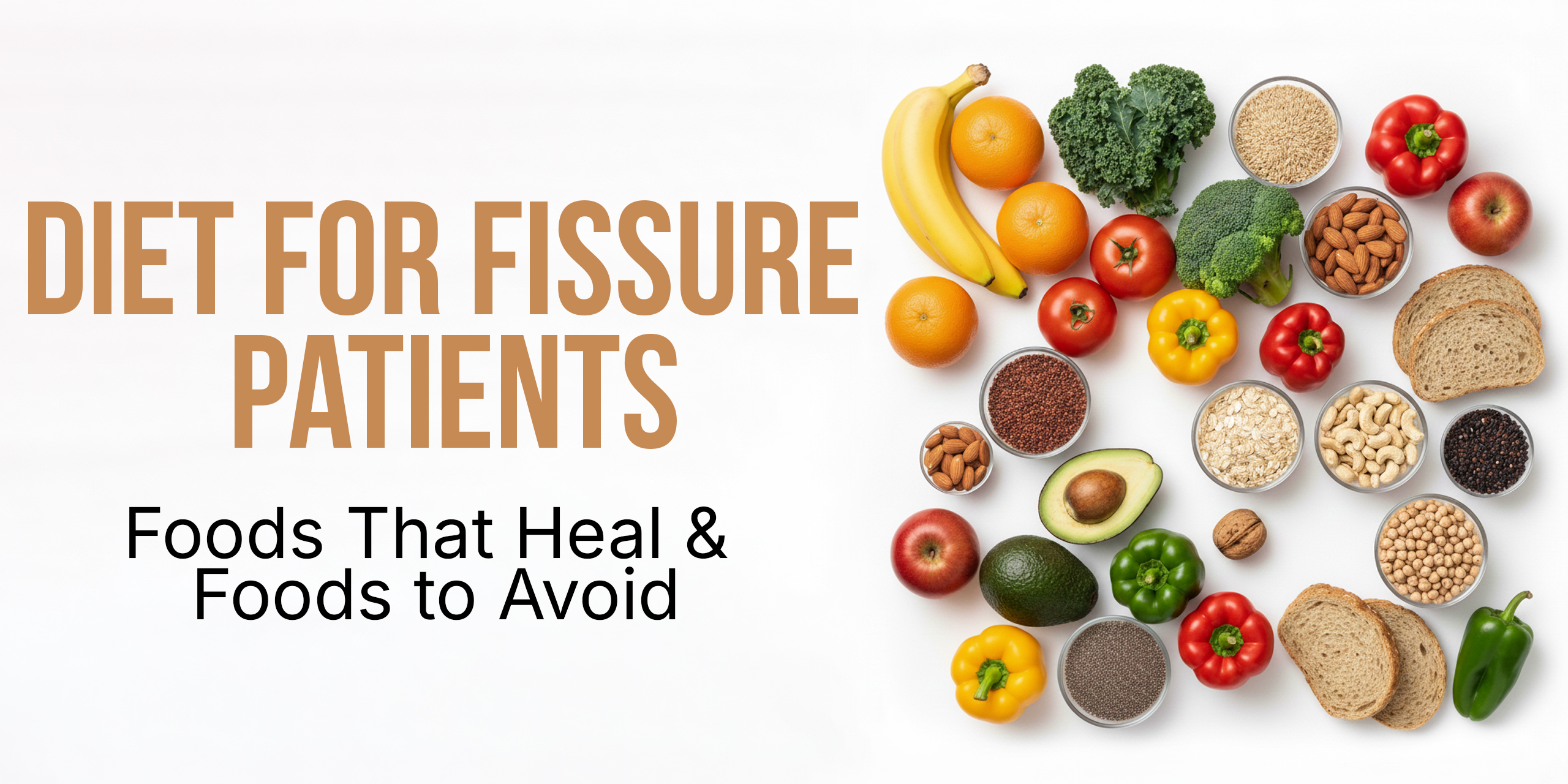
- High-Fiber Foods
Fiber helps regulate bowel movements and prevents straining, a major trigger for fissures. Include:
- Whole grains: oats, brown rice, quinoa, whole wheat bread
- Legumes: lentils, beans, chickpeas
- Fruits: apples, papaya, pears, berries
- Vegetables: spinach, carrots, broccoli, zucchini
Tip: Gradually increase fiber intake to avoid bloating.
- Hydrating Foods
Keeping stools soft requires adequate hydration. Foods with high water content help maintain digestive balance:
- Watermelon, cucumber, oranges
- Soups, broths, and smoothies
- Healthy Fats
Healthy fats lubricate the digestive system and ease stool passage:
- Olive oil, avocado, nuts, seeds
- Fatty fish like salmon, mackerel
- Probiotics
Probiotics improve gut health, aid digestion, and prevent constipation:
- Yogurt, kefir
- Fermented vegetables like kimchi, sauerkraut
Practical tip: Combine fiber with fluids and healthy fats for a soft stool diet, which is crucial for anal fissure healing.
Foods to Avoid for Anal Fissures
Eating the wrong foods can worsen constipation, irritate the anal lining, and delay healing. Avoiding these triggers helps reduce pain, bleeding, and discomfort and supports faster recovery.
- Low-Fiber & Highly Processed Foods
Processed foods are low in fiber, making stools hard and difficult to pass:
- White bread, pastries, cakes, and biscuits
- Instant noodles, packaged snacks, and ready-to-eat meals
- Frozen or processed foods with little nutritional value
- Spicy, Fried & Oily Foods
These can irritate the anal canal, increasing discomfort and inflammation:
- Hot chilies, spicy sauces, and pickles
- Deep-fried items like samosas, chips, and fried snacks
- Fast food and oily restaurant meals
- Heavy Dairy & Excess Red Meat
Overconsumption of certain proteins and fats can slow digestion and worsen constipation:
- Whole-fat cheese, cream, butter, and full-fat milk
- Large portions of beef, lamb, or other red meats
- Dehydrating Beverages
Caffeine and alcohol reduce hydration, causing hard stools:
- Coffee, strong tea, and energy drinks
- Carbonated beverages and sodas
- Alcoholic drinks in excess
Practical Tips for Anal Fissure Healing
- Replace low-fiber items with whole grains, fruits, and vegetables
- Stay hydrated with water, soups, and smoothies
- Combine diet with gentle physical activity to improve bowel movement
Tips for Effective Diet and Fissure Healing
A carefully planned diet and lifestyle can accelerate anal fissure healing, prevent constipation, and reduce discomfort. Follow these practical tips for the best results:
Effective Diet Tips for Anal Fissures
- Eat small, frequent meals: Helps improve digestion and reduces strain during bowel movements.
- Introduce fiber gradually: Prevents bloating, gas, or discomfort while promoting soft stools.
- Stay hydrated: Drink adequate water throughout the day to maintain smooth bowel movements.
- Pair fiber with physical activity: Gentle exercises or short walks help move food through the digestive tract efficiently.
- Monitor stool consistency: Adjust your fiber and fluid intake based on how soft or hard your stools are.
- Avoid skipping meals or prolonged fasting: Irregular eating patterns can worsen constipation and delay healing.
Do’s & Don’ts During Anal Fissures
Proper daily habits can support healing, reduce pain, and prevent recurrence of anal fissures. Following these simple guidelines helps maintain soft stools and healthy bowel movements.
Do’s for Anal Fissure Care
- Stay hydrated: Drink 2–3 litres of water daily to prevent hard stools.
- Eat a fiber-rich diet: Include whole grains, fruits, vegetables, and legumes.
- Engage in gentle activity: Short walks or light exercises improve bowel function.
- Use warm sitz baths: Helps relax anal muscles and relieve pain or spasm.
- Follow medical advice: Use prescribed medications, ointments, or topical treatments consistently.
Don’ts for Anal Fissure Healing
- Avoid straining: Never force bowel movements, as this worsens tears.
- Don’t ignore symptoms: Persistent pain or bleeding needs timely evaluation.
- Limit prolonged sitting/standing: Reduces pressure on the anal veins and tissue.
- Avoid irritant foods: Cut down spicy, fried, oily, and processed items.
Do not delay consultation: Chronic fissures require prompt medical attention for effective healing
Lifestyle Habits to Support Anal Fissure Healing
In addition to a proper diet, certain lifestyle habits can promote natural healing, prevent constipation, and reduce pain associated with anal fissures.
Recommended Habits
- Maintain regular bowel habits: Respond promptly to bowel urges to avoid straining.
- Avoid crossing legs or wearing tight clothing: Prevents unnecessary pressure on the anal area.
- Take short walks after meals: Stimulates digestion and helps regular bowel movements.
- Avoid heavy lifting or strenuous activity: Reduces strain on the pelvic and anal muscles.
Benefits of These Habits
- Supports soft, easy-to-pass stools
- Reduces pain, discomfort, and irritation
- Enhances natural fissure healing
- Helps prevent recurrence
Medical Support Alongside Diet for Anal Fissures
While a high-fiber diet, hydration, and healthy lifestyle habits are essential for healing anal fissures, some cases may require medical support to prevent complications and accelerate recovery.
When Diet Alone Isn’t Enough
- Persistent pain, bleeding, or chronic fissures that do not improve with home care.
- Hard or infrequent stools that continue to strain the anal lining.
Medical Interventions
- Stool softeners: To ease bowel movements and reduce straining.
- Topical ointments or creams: Promote healing, reduce inflammation, and relieve pain.
- Minimally invasive procedures: For chronic or severe fissures, procedures like fissurectomy or Botox injections may be recommended.
Medfine Hospitals Approach
At Medfine Hospitals, we provide a comprehensive treatment plan combining:
- Nutritional guidance and a customized anal fissure diet plan
- Lifestyle modifications and home care strategies
- Timely medical interventions for faster, safer healing
Benefits: Faster recovery, reduced pain, prevention of recurrence, and improved gut health.
FAQs – Diet & Anal Fissures
Can diet alone heal anal fissures?
Diet helps soften stools and reduce strain, but chronic fissures may need medical care for faster healing.
How much fiber should I consume daily?
Aim for 25–35 grams of fiber daily from fruits, vegetables, whole grains, and legumes to prevent constipation.
Are spicy foods bad for anal fissures?
Yes, spicy and oily foods can irritate fissures and slow healing.
Can probiotics help?
Probiotics improve gut health and regularity, reducing strain during bowel movements. Include yogurt, kefir, or fermented foods.
Limit caffeine, alcohol, and carbonated drinks as they can dehydrate and harden stools. Drink plenty of water and hydrating fluids.
Limit caffeine, alcohol, and carbonated drinks as they can dehydrate and harden stools. Drink plenty of water and hydrating fluids.
Conclusion
- A high-fiber, hydrating, and gut-friendly diet supports soft stools and speeds up anal fissure healing.
- Avoid constipation-triggering foods and irritating habits to prevent worsening of fissures.
- Combine dietary management with medical monitoring for safe and effective recovery.
- Medfine Hospitals offers personalized, evidence-based gastroenterology care, ensuring faster, comfortable healing.
Experiencing anal fissure pain? Consult Medfine Hospital’s gastroenterology specialists for a personalized diet and treatment plan. Book your appointment today for expert care and faster recovery!.