

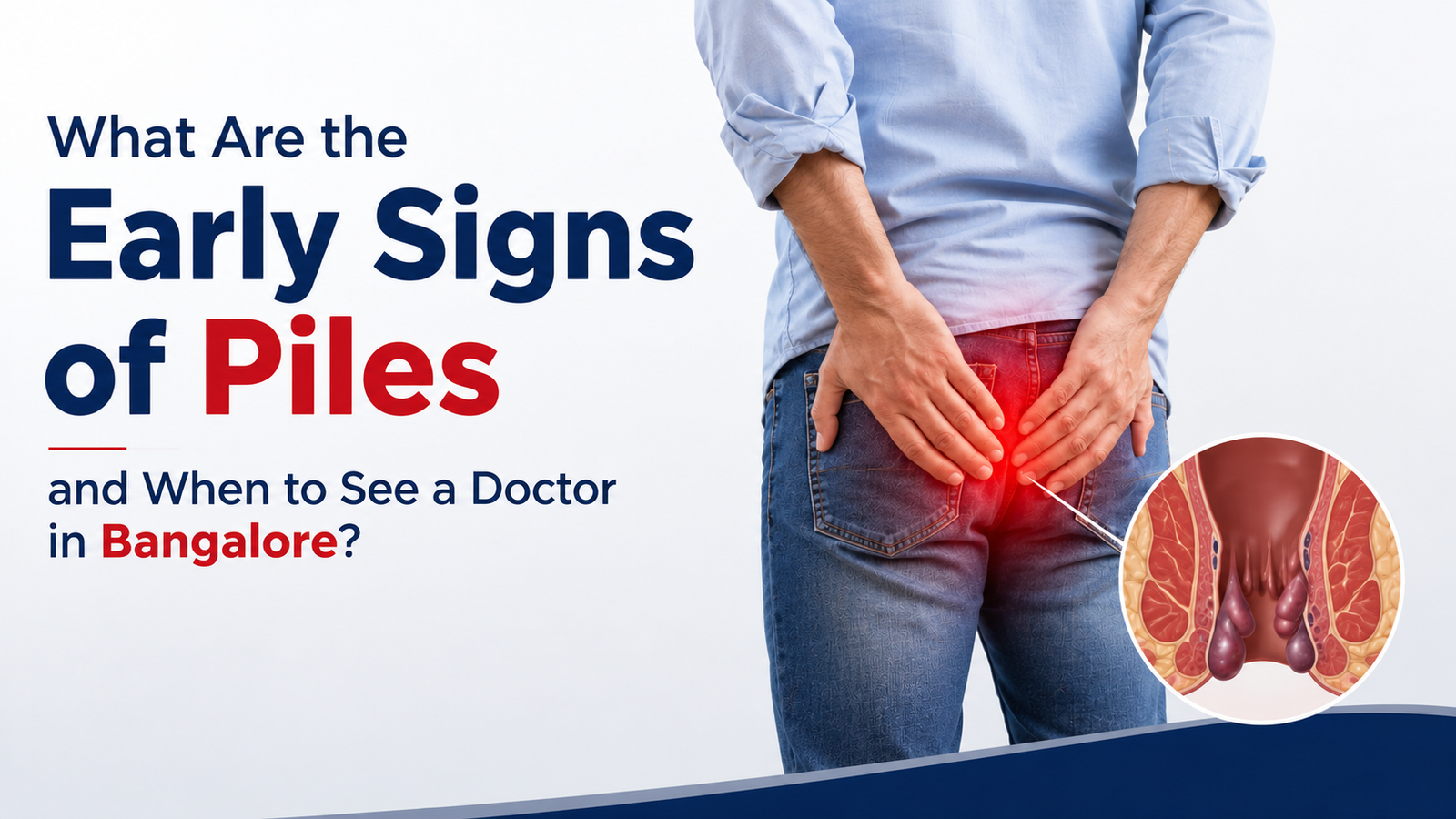
Piles, also known as hemorrhoids, often begin with mild symptoms that many people ignore. A small amount of bleeding during bowel movements, occasional anal itching, or slight discomfort while passing stools may not seem serious initially. Because these symptoms appear mild and intermittent, many people assume they are temporary and delay seeking medical care.
However, piles usually develop gradually. What begins as minor irritation can progress to persistent bleeding, swelling, pain, prolapse, and difficulty sitting if left untreated. Early symptoms are often the body’s warning signs that pressure is increasing around the rectal veins.
Many patients postpone consultation because of embarrassment, fear of surgery, or the belief that the condition will resolve on its own. Others confuse piles symptoms with digestive issues, skin irritation, or temporary constipation. Unfortunately, delaying diagnosis may allow the condition to advance and make treatment more complex.
Recognising the early signs of piles is important because timely diagnosis often means simpler treatment, faster recovery, and fewer complications.
Why Do Early Piles Symptoms Often Go Unnoticed?
One reason piles are frequently diagnosed late is that early-stage hemorrhoids may not cause severe pain.
Internal piles, especially during the initial stages, develop inside the rectum where pain-sensitive nerves are limited. Because of this, patients may experience only:
- Mild bleeding
- Occasional itching
- Slight discomfort
- Feeling of incomplete bowel emptying
Since these symptoms are not always painful, they are often ignored.
Modern lifestyle habits also contribute to delayed recognition. Long sitting hours, work stress, poor diet, and chronic constipation have made piles increasingly common among young adults and working professionals.
What Are Piles?
Piles, medically known as haemorrhoids, are swollen and enlarged veins present inside the rectum or around the anus. They develop when pressure increases in the lower rectal region, causing the veins to stretch, swell, and become inflamed.
Although piles are common, many people hesitate to talk about symptoms due to embarrassment, leading to delayed diagnosis and treatment.
Piles can affect adults of any age, but they are more commonly seen in people with chronic constipation, sedentary lifestyles, prolonged sitting habits, obesity, pregnancy, and low-fiber diets.
Based on their location, piles are broadly classified into:
- Internal Piles
Internal piles develop inside the rectum and are usually not visible externally. They may remain painless during the early stages because the rectum contains fewer pain-sensitive nerves.
Common symptoms include:
- Bleeding during bowel movements
- Mild discomfort
- Feeling of incomplete bowel emptying
If untreated, internal piles can enlarge and eventually protrude outside the anus (prolapse).
- External Piles
External piles develop around the anal opening beneath the skin.
Compared to internal piles, external haemorrhoids are more likely to cause:
- Pain
- Swelling
- Itching
- Tenderness
- Difficulty sitting
External piles may become particularly uncomfortable if blood clots develop.
Why Do Piles Develop?
Several factors increase pressure on rectal veins and contribute to piles formation.
Chronic Constipation and Straining
One of the biggest causes of piles is chronic constipation. Repeated straining while passing hard stools increases pressure inside the rectal veins.
Over time, this constant pressure weakens the blood vessels and contributes to haemorrhoid formation.
Prolonged Sitting
Long sitting hours-especially among office workers, drivers, and people working remotely—have become an important lifestyle factor.
Sitting continuously increases pressure around the anal region and reduces blood circulation.
This is one reason piles are increasingly seen in young adults and working professionals.
Low-Fiber Diet
Diets lacking Fiber lead to harder stools and irregular bowel movements.
Insufficient intake of:
- Fruits
- Vegetables
- Whole grains
- Fluids
can increase constipation and worsen piles symptoms.
Pregnancy
Pregnant women commonly develop piles due to:
- Increased abdominal pressure
- Hormonal changes
- Constipation during pregnancy
Symptoms often become more noticeable during later pregnancy stages.
Obesity and Sedentary Lifestyle
Excess body weight increases abdominal pressure and contributes to poor circulation.
Combined with physical inactivity, obesity significantly raises piles risk.
Early Signs of Piles You Should Not Ignore
Piles often begin with subtle symptoms that people dismiss as temporary irritation or digestive issues.
Recognising these early signs allows treatment before complications develop.
Bleeding During or After Bowel Movements
One of the earliest and most common signs is bright red bleeding while passing stools.
Bleeding may appear:
- On toilet paper
- Mixed with stool surface
- In the toilet bowl
Internal hemorrhoids commonly present with painless bleeding.
Although hemorrhoids are a common cause, rectal bleeding should never be self-diagnosed, as other conditions may also present similarly.
Itching and Irritation Around the Anal Area
Persistent itching around the anus is another frequently ignored symptom.
This usually occurs because inflammation and mucus secretions irritate nearby skin.
Symptoms may worsen:
- After bowel movements
- During prolonged sitting
- In hot weather
Pain, Burning, and Discomfort
Pain usually develops as inflammation progresses.
Patients often report:
- Burning sensation after bowel movement
- Mild anal discomfort
- Pain while sitting
- Tenderness around the anus
External piles tend to produce stronger pain symptoms than internal hemorrhoids.
Swelling or a Lump Near the Anal Opening
Many people notice a small swelling or soft lump around the anus.
Initially, this lump may:
- Appear intermittently
- Increase after bowel movements
- Cause mild discomfort
Over time, swelling can become persistent.
Feeling of Incomplete Bowel Emptying
Some patients experience a sensation that stool has not completely passed.
This feeling often causes repeated straining, further worsening piles.
Although subtle, this symptom can indicate progression.
How Early Piles Progress If Ignored
Piles rarely become severe overnight.
Most advanced cases begin with mild symptoms that remain untreated.
Without treatment, progression may lead to:
- Stage 1: Minor bleeding without prolapses.
- Stage 2: Piles protrude during bowel movements but return automatically.
- Stage 3: Prolapse requires manual repositioning.
- Stage 4: Permanent prolapse with increased pain and complications.
Early treatment prevents progression and reduces treatment complexity.
Could It Be Something Other Than Piles?
Symptoms like bleeding, pain, itching, and swelling are not exclusive to piles.
Several conditions can mimic hemorrhoids.
Usually causes severe pain during bowel movements and may cause bleeding.
Often presents with discharge, swelling, and recurrent infection.
- Other Rectal Conditions
Persistent bleeding always requires evaluation.
Avoid self-diagnosis.
Frequently Asked Questions
What are the earliest signs of piles?
The earliest signs of piles often include bleeding during bowel movements, anal itching, mild discomfort, swelling near the anus, and a feeling of incomplete bowel emptying. These symptoms may appear mild initially but can worsen if ignored.
Is bleeding during bowel movements always caused by piles?
No. Although hemorrhoids are a common cause of rectal bleeding, other conditions such as anal fissures, fistulas, polyps, or other rectal problems may also cause similar symptoms. Persistent bleeding should always be medically evaluated.
When should I see a doctor for piles?
You should consult a doctor if you experience persistent bleeding, pain, swelling, recurrent symptoms, difficulty sitting, or symptoms that do not improve with lifestyle changes. Early treatment helps prevent progression.
Can early-stage piles be treated without surgery?
Yes. Many early-stage piles can often be managed with dietary changes, increased fiber intake, hydration, medications, and lifestyle modifications. Advanced cases may require minimally invasive treatment.
Can piles become serious if left untreated?
Yes. Untreated piles may gradually progress and lead to persistent bleeding, prolapse, pain, inflammation, and difficulty in daily activities. Early diagnosis usually makes treatment simpler and recovery faster.
Are piles common among young adults?
Yes. Due to long sitting hours, sedentary lifestyles, poor diet, and chronic constipation, piles are increasingly being diagnosed among young adults and working professionals.
Conclusion
The early signs of piles often begin with symptoms that seem minor—such as bleeding during bowel movements, anal itching, mild discomfort, swelling, or a feeling of incomplete bowel emptying. Because these symptoms are usually painless in the beginning, many people ignore them until the condition progresses.
However, piles tend to worsen gradually if left untreated, potentially leading to persistent pain, prolapse, recurrent bleeding, and difficulty in daily activities. Early recognition and timely medical evaluation help prevent complications and make treatment simpler and more effective.
If symptoms persist, worsen, or interfere with daily life, seeking professional care early ensures accurate diagnosis, appropriate treatment, and faster recovery. At Medfine Hospitals, patients can access advanced piles treatment in Bangalore, including stage-based care and minimally invasive treatment options designed for long-term relief.