

Introduction
Chronic knee pain doesn’t just affect your body — it slowly limits your independence, confidence, and quality of life. Climbing stairs starts to hurt, walking short distances feels exhausting, and even resting fails to ease the discomfort. For many people, these are signs that the joint has suffered more than temporary strain.
While most knee conditions improve with medications, physiotherapy, lifestyle changes, or injections, there comes a stage when conservative treatments no longer provide relief. This is when a knee replacement surgery becomes the most effective and long-lasting solution — helping you regain movement, stability, and pain-free living.
At Medfine Hospital, Bangalore, our team of orthopedic specialists brings decades of experience in diagnosing and treating complex knee disorders. Each patient undergoes a thorough evaluation to determine whether surgery is truly necessary — ensuring that you receive the right treatment at the right time.
Our approach prioritizes:
- Accurate diagnosis using advanced imaging and physical assessment
- Personalized treatment planning based on age, lifestyle, and joint condition
- Comprehensive post-surgery rehabilitation for faster, safer recovery
Knee replacement surgery at Medfine isn’t just about replacing a joint — it’s about restoring mobility, comfort, and confidence so you can return to an active life without constant pain.
What Is a Knee Replacement?
Knee replacement, also known as knee arthroplasty, is a surgical procedure in which the damaged or worn-out parts of the knee joint are replaced with biocompatible artificial implants. These implants replicate the smooth movement of a natural joint, helping to relieve pain, reduce stiffness, and restore mobility for people whose knees are affected by arthritis, injury, or age-related degeneration.
Types of Knee Replacement
Depending on how much of the joint is damaged, your orthopedic surgeon may recommend one of the following procedures:
- Partial Knee Replacement: When damage is limited to a single compartment of the knee, only that portion is replaced. This preserves healthy bone and ligaments, offering a quicker recovery and a more natural feel.
- Total Knee Replacement: When the entire joint surface is affected by advanced arthritis or trauma, all the damaged areas are replaced to restore stability, strength, and long-term comfort.
At Medfine Hospital, Bangalore, each patient undergoes a detailed evaluation to decide which procedure best suits their condition, ensuring precise treatment and better outcomes.
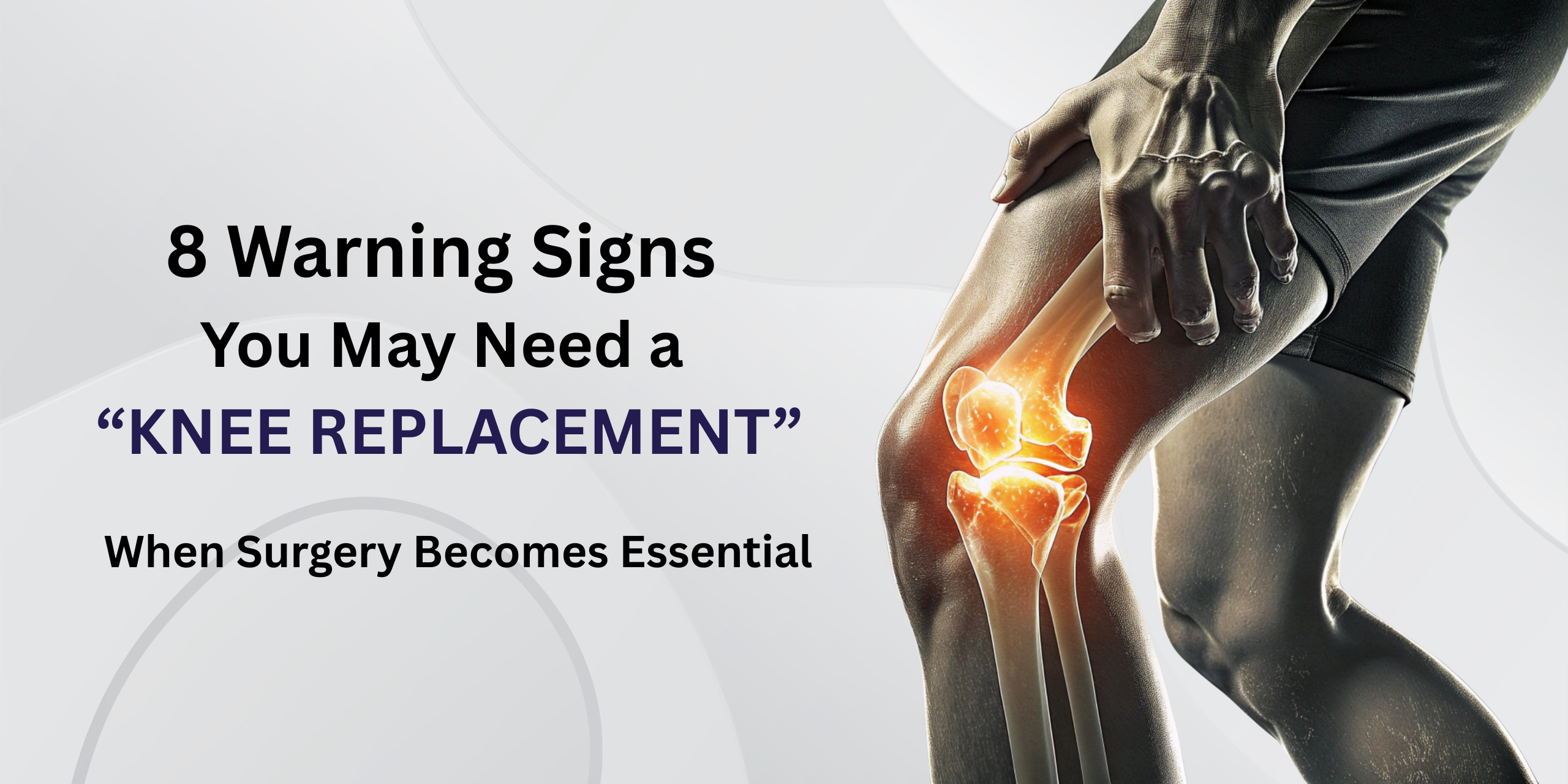
8 Signs You May Need a Knee Replacement
If you’ve been struggling with chronic knee pain for months and conservative treatments like physiotherapy, medications, or lifestyle changes no longer help, it might be time to consider knee replacement surgery. Recognizing these early warning signs can help you seek the right care before your joint damage becomes severe.
Below are eight key signs that indicate it may be time to talk to your orthopedic specialist about a knee replacement.
Severe and Persistent Knee Pain
Continuous pain — whether at rest, while walking, or even during sleep — is one of the strongest indicators of joint deterioration. If painkillers or injections no longer provide relief, it often means the cartilage cushioning your joint has significantly worn down, causing bone-to-bone friction.
Limited Mobility or Difficulty Climbing Stairs
When bending, standing, or walking short distances becomes difficult, it signals that the joint surfaces have become rough and uneven. Difficulty climbing stairs or performing daily tasks suggests that your knee has lost flexibility and strength.
Stiffness After Sitting or Waking Up
Morning stiffness or discomfort after long periods of rest often points to progressive osteoarthritis. Over time, the joint’s natural lubrication decreases, making it hard to bend or straighten your knee smoothly.
Swelling and Inflammation That Keeps Returning
Occasional swelling can result from minor strain, but persistent inflammation that keeps coming back — even after anti-inflammatory medicines — may indicate structural damage inside the joint. This is a common sign that medical therapy alone may no longer be enough.
Deformity or Bowed Legs
If you notice that your leg looks bowed or misaligned, it could be due to cartilage loss and uneven pressure on the knee joint. Over time, this deformity worsens and affects balance, gait, and overall posture.
Failed Non-Surgical Treatments
When conservative options like physiotherapy, pain management, or steroid injections fail to offer lasting relief, it’s a clear sign that joint preservation methods have reached their limit. At this stage, surgical intervention can restore long-term comfort and mobility.
Bone-on-Bone Friction Seen in X-Rays
If your X-rays show narrowing of joint space or direct contact between bones, it confirms that cartilage has eroded completely. This is one of the clearest medical indicators for knee replacement surgery to prevent further damage and deformity.
Impact on Quality of Life
When knee pain affects your ability to work, sleep, or enjoy everyday activities, it’s time to take action. Constant discomfort can also impact mental health, leading to frustration, fatigue, and reduced confidence in movement.
If several of these warning signs sound familiar, it’s important not to ignore them. Schedule a consultation with the orthopedic experts at Medfine Hospital, Bangalore, to assess your condition and explore safe, effective treatment options — so you can move freely and live pain-free again.
Common Conditions Leading to Knee Replacement
Knee replacement surgery is generally recommended only after long-term joint damage caused by chronic diseases or trauma. Understanding the underlying condition helps patients and doctors choose the most effective treatment plan before the joint deteriorates further.
Below are the five major conditions that most often lead to a knee replacement:
Osteoarthritis
The most common cause of knee replacement, osteoarthritis occurs when the protective cartilage that cushions the joint gradually wears away. Friction between bones causes pain, stiffness, and swelling that worsen over time.
Rheumatoid Arthritis
An autoimmune disorder in which the body’s immune system attacks joint linings, rheumatoid arthritis results in chronic inflammation, cartilage erosion, and deformity. When medication no longer controls pain or swelling, surgical replacement becomes the most reliable option.
Post-Traumatic Arthritis
Previous injuries such as fractures, ligament tears, or meniscus damage can lead to post-traumatic arthritis years later. Repeated inflammation and uneven pressure accelerate cartilage wear, limiting movement and stability.
Avascular Necrosis
Also called osteonecrosis, this condition occurs when poor blood flow to the bone causes tissue death. It weakens the joint surface, leading to collapse and severe pain that often requires joint replacement to restore function.
Genetic or Post-Injury Cartilage Damage
Orthopedicians use detailed imaging and physical assessments to identify the root cause of knee pain before recommending surgery. This ensures every treatment plan addresses not just the symptoms but the underlying joint condition for long-term relief.
Advanced Knee Replacement Options
Modern advancements in knee replacement surgery have transformed how patients experience recovery, comfort, and long-term results. At Medfine Hospital, Bangalore, these innovations ensure every procedure is safer, more precise, and tailored to each patient’s unique anatomy.
Robotic-Assisted Knee Replacement
Medfine uses robotic-assisted systems that allow surgeons to plan and perform each procedure with sub-millimeter accuracy. The robotic arm maps your knee anatomy in real time, guiding precise bone cuts and implant placement.
Benefits include:
- Greater implant alignment accuracy
- Less tissue trauma and reduced blood loss
- Shorter hospital stays and quicker rehabilitation
Minimally Invasive Knee Replacement
This technique uses smaller incisions and refined instruments to minimize soft-tissue disruption. Patients typically experience:
- Lower post-operative pain
- Reduced scarring
- Faster return to daily activities
3D-Printed & Customized Implants
For patients with unique joint structures, 3D-printed and custom-fit implants ensure optimal compatibility and comfort. Tailored alignment improves joint stability and reduces wear over time, extending the implant’s lifespan.
Experienced Orthopedic Team & Proven Outcomes
Our certified orthopedic surgeons at Medfine Hospital, Bangalore have successfully performed numerous knee replacement surgeries with high patient satisfaction and improved mobility scores. Every procedure is supported by a multidisciplinary care team — including anaesthetists, physiotherapists, and rehabilitation specialists — ensuring holistic recovery and long-term success.
Diagnosis and Evaluation Before Surgery
Before recommending knee replacement surgery, the specialists at Medfine Hospital, Bangalore, perform a comprehensive evaluation to determine the exact condition of your joint and the most effective treatment plan. This ensures that surgery is only advised when absolutely necessary and that every patient receives personalized care.
- Clinical and Physical Examination
The process begins with a detailed physical assessment to evaluate pain levels, range of motion, swelling, and overall knee stability. This helps identify how much the joint structure and surrounding muscles are affected.
- Imaging Tests – X-rays and MRI
- X-rays reveal joint space narrowing, deformities, and bone alignment issues.
- MRI scans provide detailed images of cartilage, ligaments, and soft tissues, allowing surgeons to assess the full extent of joint damage.
- Joint Function and Movement Tests
Advanced mobility tests are used to measure strength, flexibility, and joint performance during motion. These results help surgeons plan precise implant positioning for the best post-surgery outcomes.
- Multidisciplinary Pre-Surgical Assessment
Every patient undergoes a collaborative evaluation by multiple specialists, including:
- Orthopedic surgeons – to plan the surgical approach
- Anaesthesiologists – to ensure safety during anaesthesia
- Physiotherapists – to prepare a tailored rehabilitation plan
This multidisciplinary process helps minimize surgical risks and promotes smoother recovery from the very first day.
Recovery and Rehabilitation
Recovery after knee replacement surgery is a structured process designed to restore mobility, strength, and confidence in movement while minimizing pain. At Medfine Hospital, Bangalore, our orthopedic team ensures every patient follows a personalized rehabilitation plan to achieve the best outcomes.
Post-Surgery Guidelines
- Day 1: Patients are encouraged to stand and move the affected leg with support, promoting circulation and reducing stiffness.
- Week 1: Begin walking with support (walker or crutches), gradually increasing activity while maintaining safety.
- Weeks 2–6: Progress to weight-bearing exercises and gentle knee bending under physiotherapy supervision.
- Weeks 6–12: Increase mobility with strengthening exercises, balance training, and daily activity practice.
Physiotherapy and Exercise Plan
Physiotherapy is crucial for a speedy and safe recovery. Patients follow a combination of:
- Stretching and flexibility exercises to restore knee motion
- Strengthening exercises for quadriceps, hamstrings, and calf muscles
- Balance and gait training to improve walking and posture
Diet and Nutrition for Recovery
A balanced diet supports bone healing, muscle repair, and overall recovery. Key recommendations include:
- High-protein meals to aid tissue regeneration
- Calcium- and vitamin D-rich foods for bone health
- Adequate hydration and a diet low in inflammatory foods to reduce swelling.
At Medfine Hospital, our multidisciplinary rehabilitation team ensures that every patient receives continuous guidance from surgery through full recovery — helping you return to normal daily activities safely and confidently.
Frequently Asked Questions
What is the best age for knee replacement?
Usually recommended for patients over 50, but younger patients with severe joint damage may also be eligible if conservative treatments fail.
Can both knees be replaced at once?
Yes, in select patients with good overall health. Your surgeon will assess safety and recovery ability.
How long does a knee implant last?
Modern implants can last 15–20 years or more, depending on activity, weight, and follow-up care.
Can physiotherapy delay surgery?
Targeted physiotherapy can temporarily reduce pain, but surgery may be needed if joint damage progresses.
Is robotic knee replacement safer?
Robotic-assisted surgery improves precision and alignment, but traditional knee replacement by an experienced surgeon is also safe and effective.
Conclusion
Chronic knee pain shouldn’t limit your daily activities or affect your quality of life. If you’ve been struggling with discomfort, stiffness, or reduced mobility, now is the time to seek expert care.
At Medfine Hospital, Bangalore, our orthopedic specialists provide personalized assessment and guidance to help you choose the most suitable knee replacement option — whether partial or total. With advanced techniques and a patient-focused approach, we ensure a safer procedure, faster recovery, and long-term joint health.
📞 Book a consultation today to take your first step toward pain-free mobility and regain confidence in every movement.
Related Links
- Knee Replacement Overview
- Recovering from a knee replacement